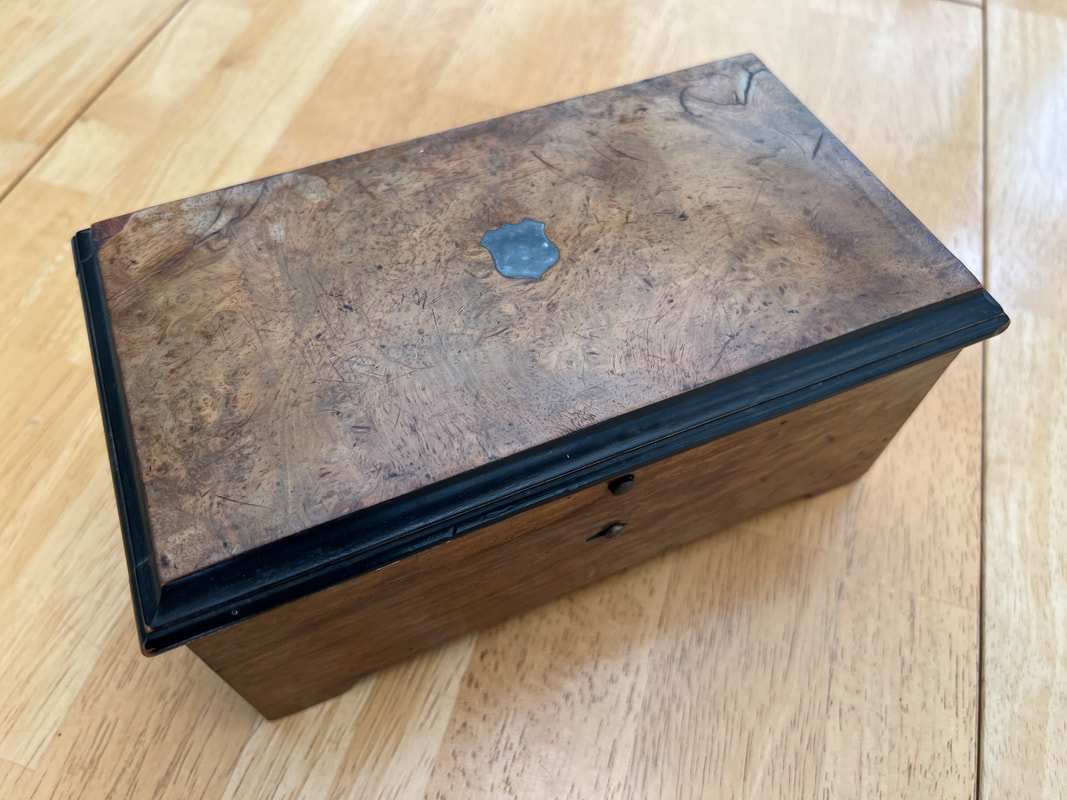
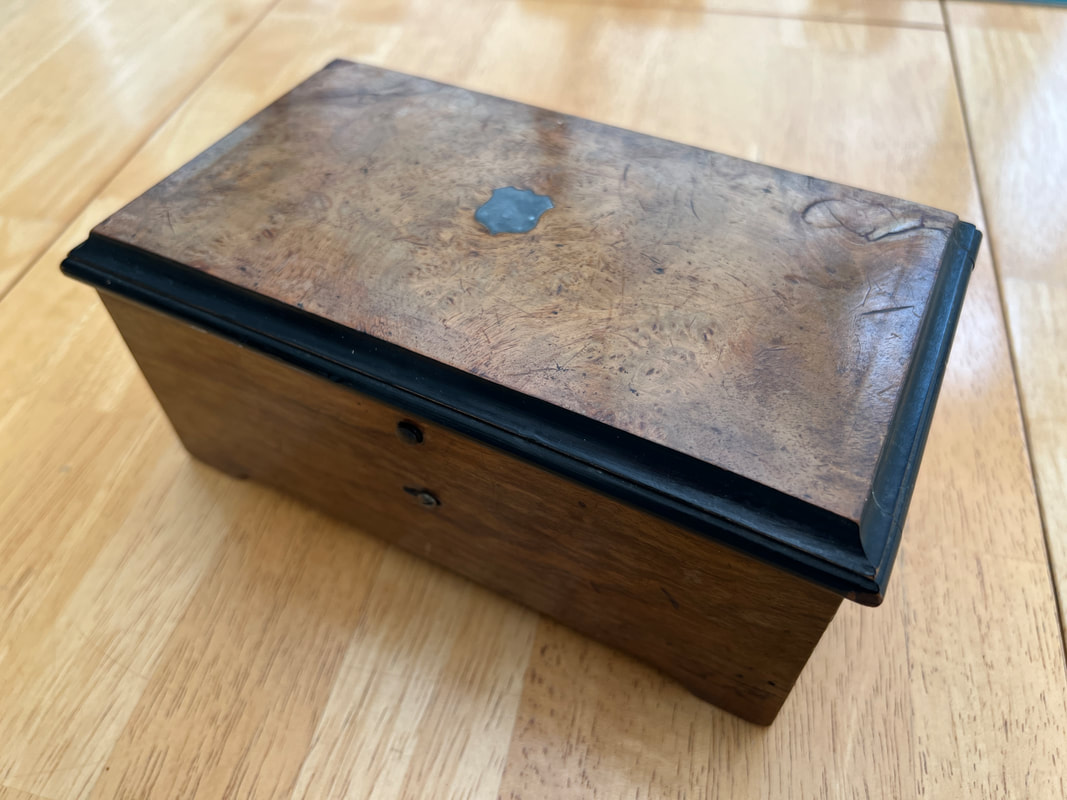
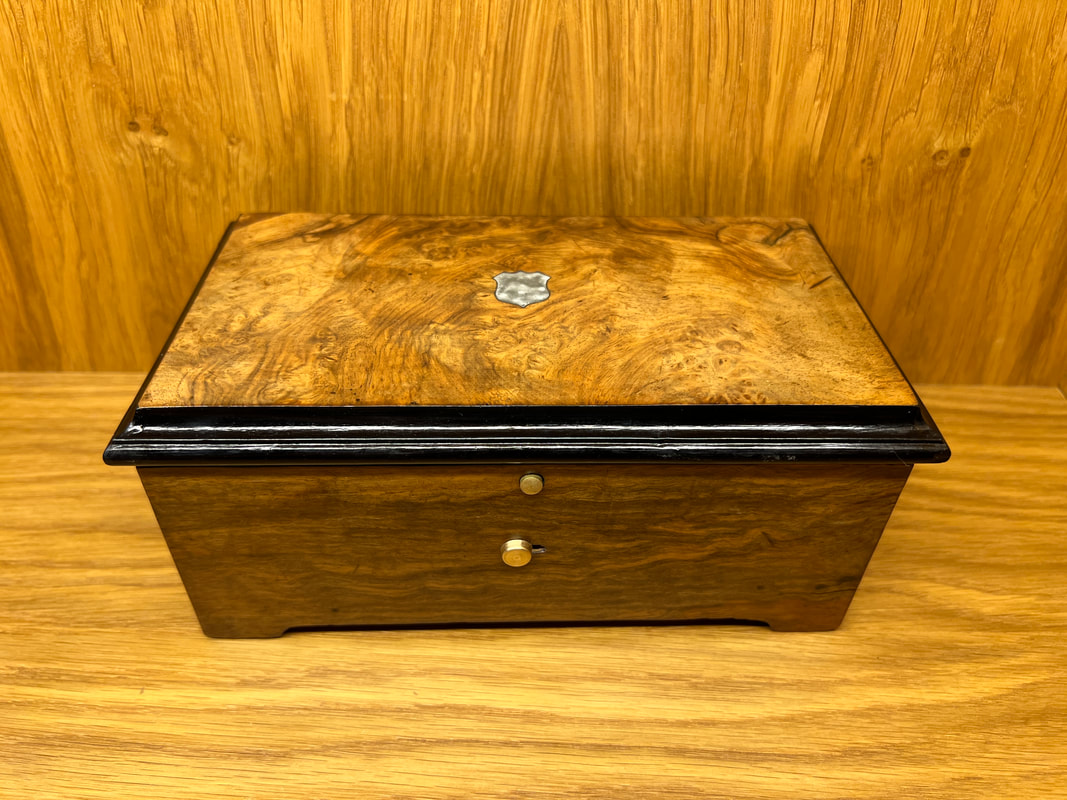
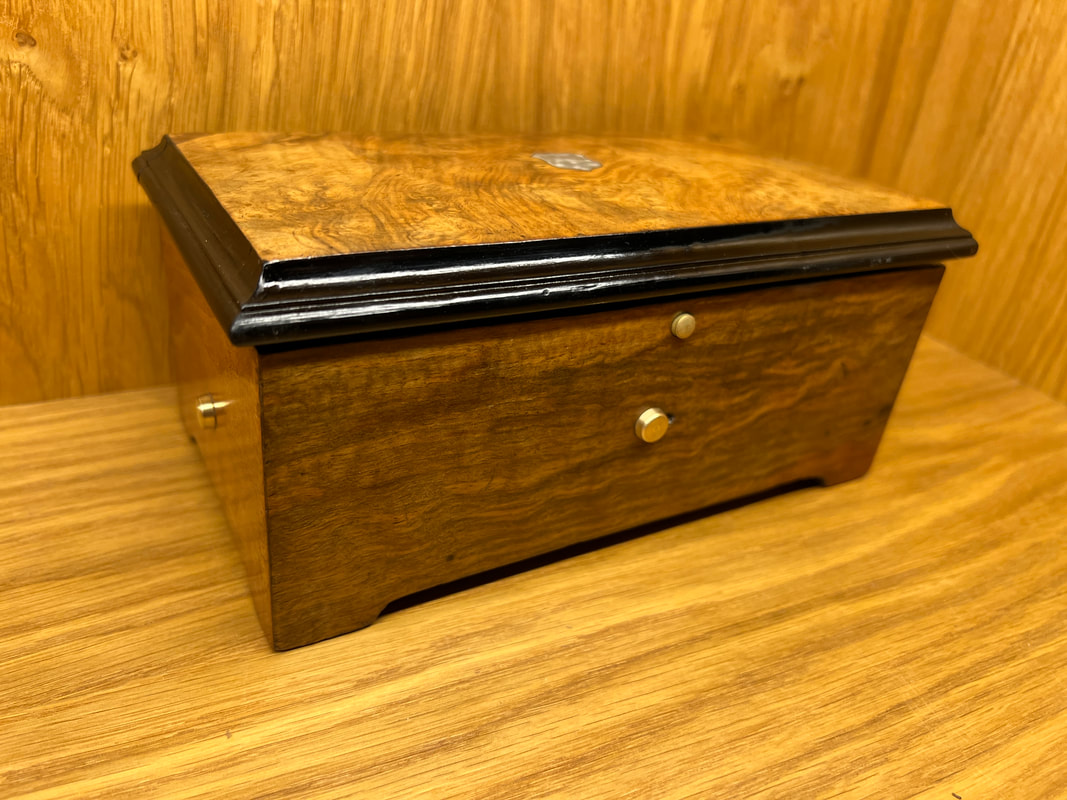
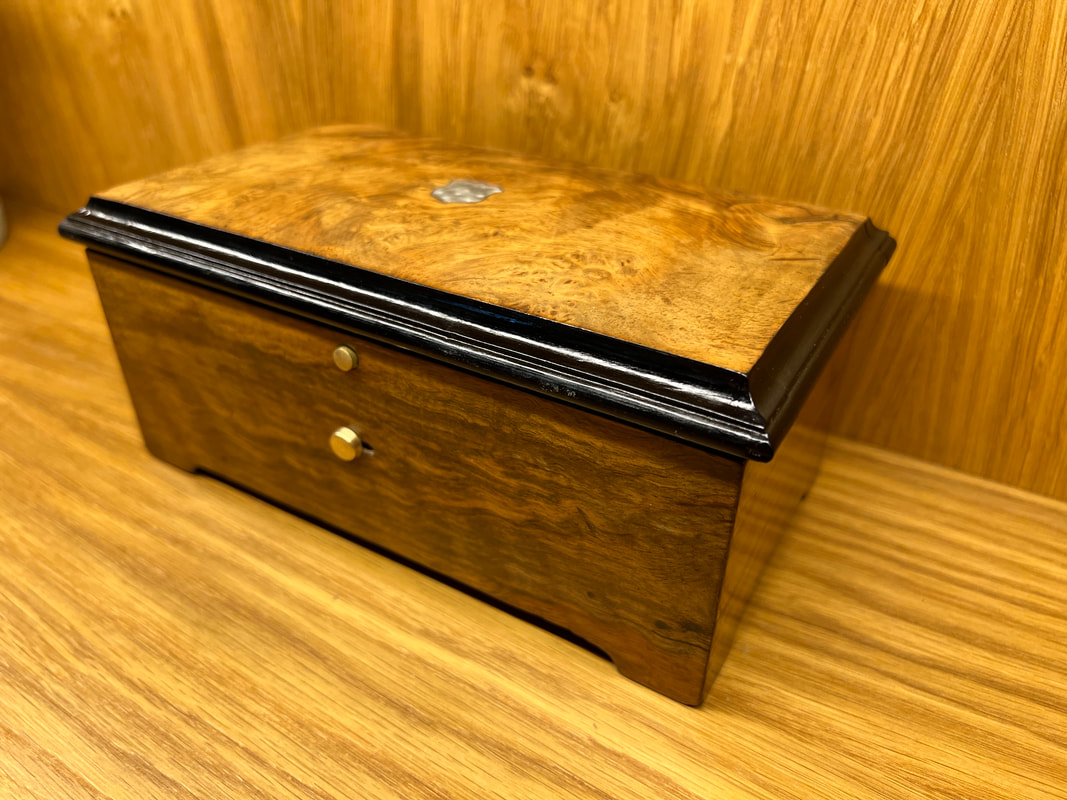
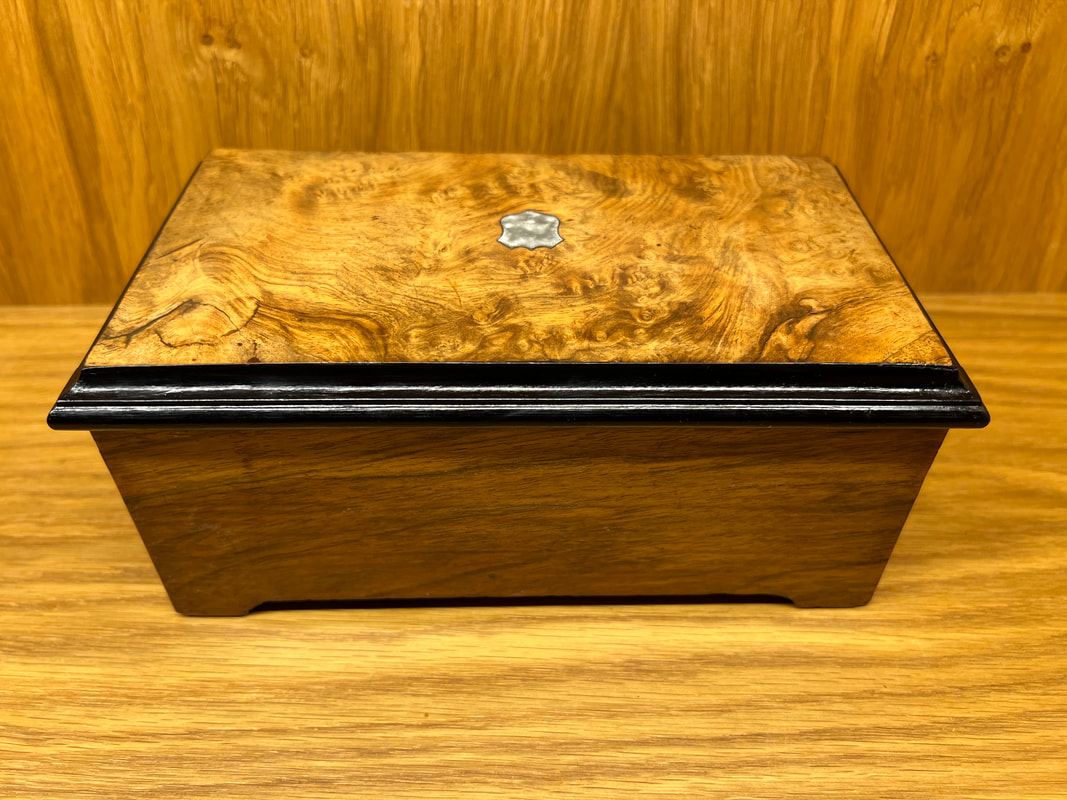
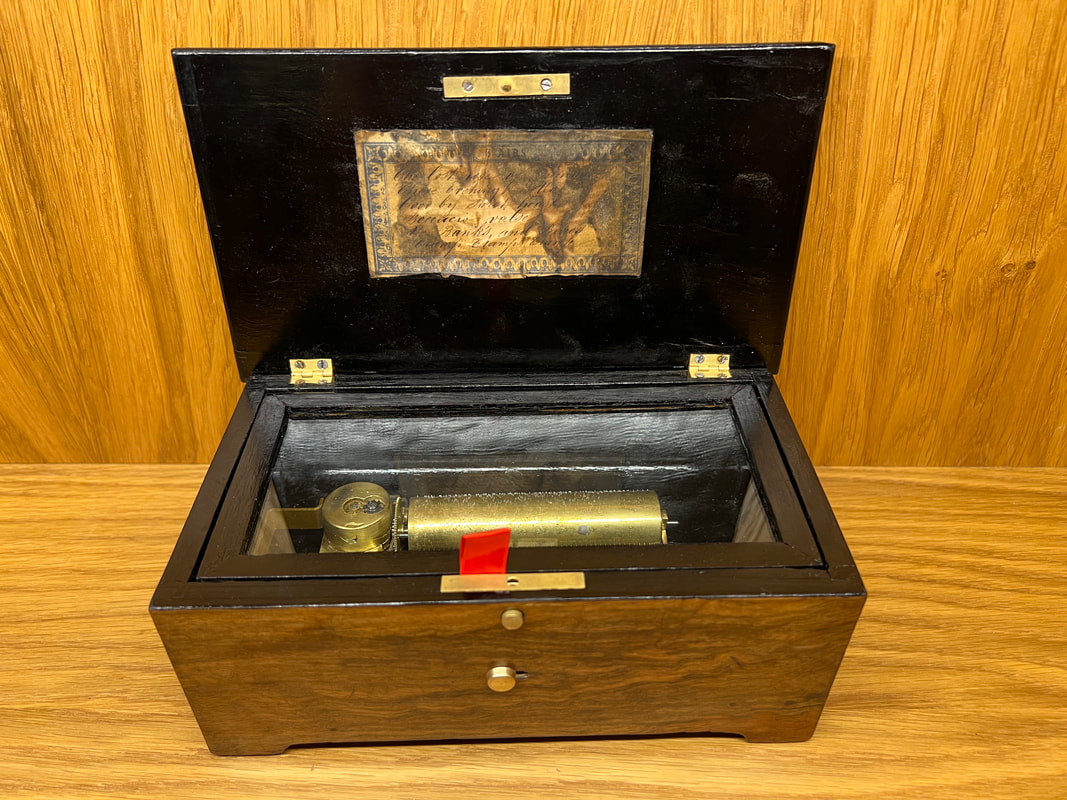
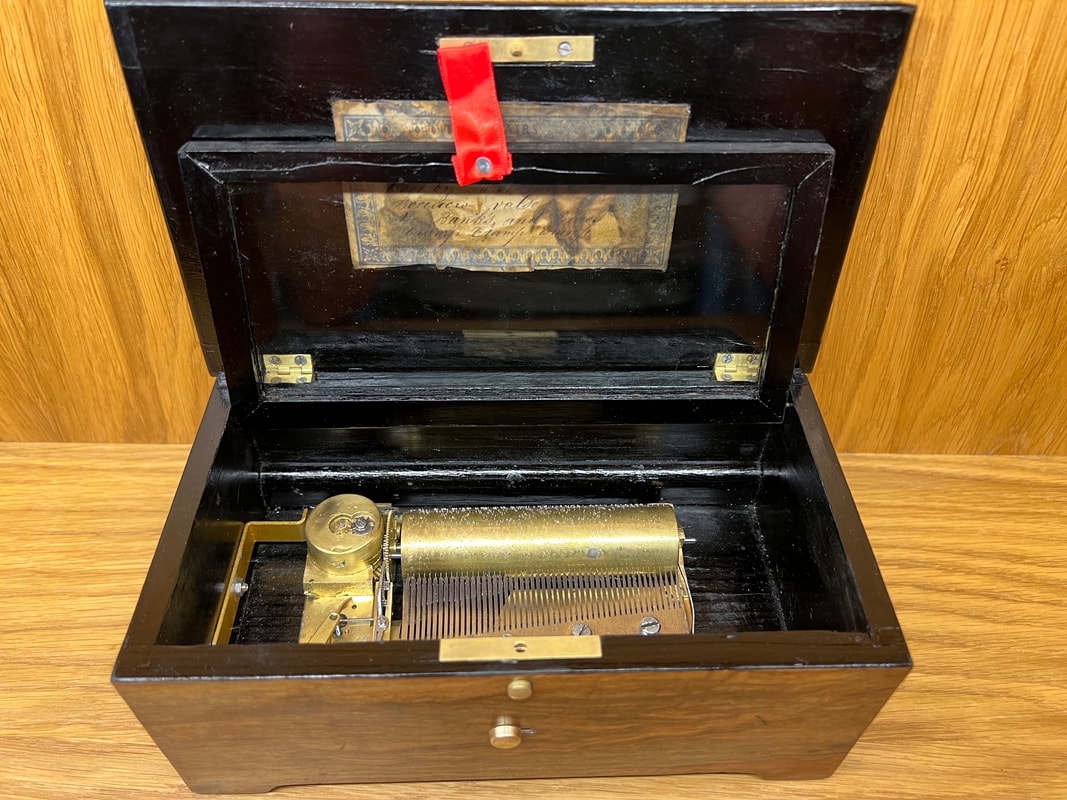
6/51 Petites Musique in Mini Cartel style box Circa 1880
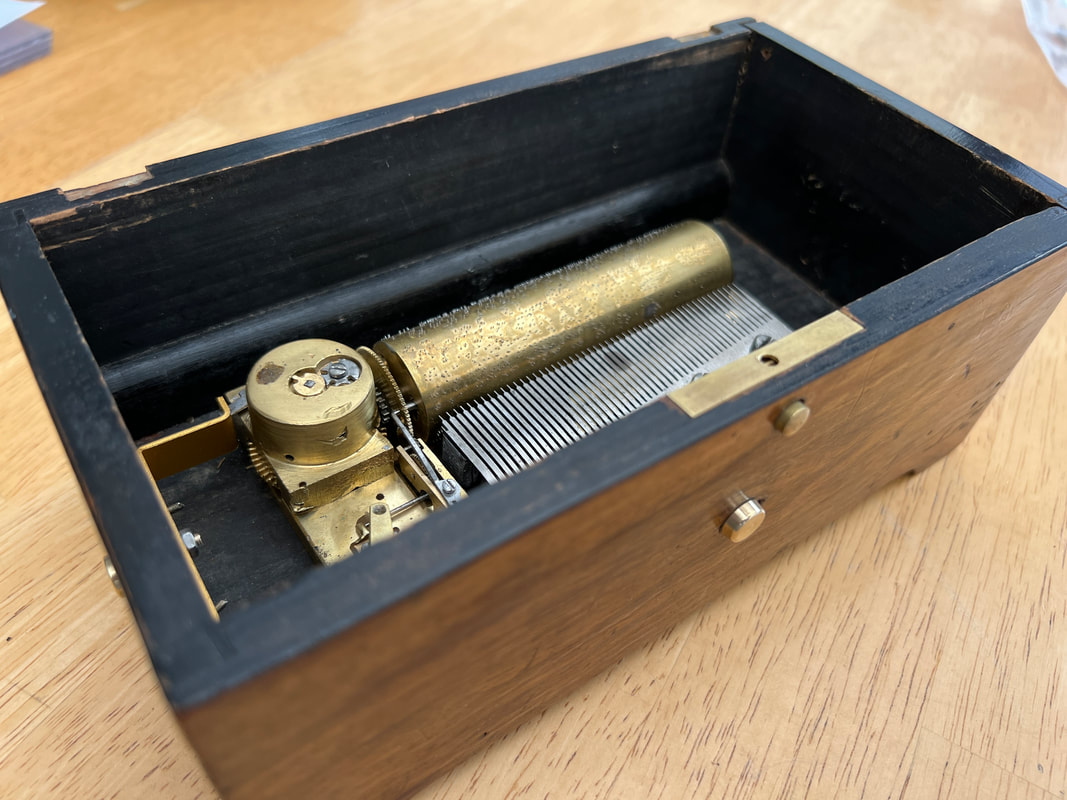
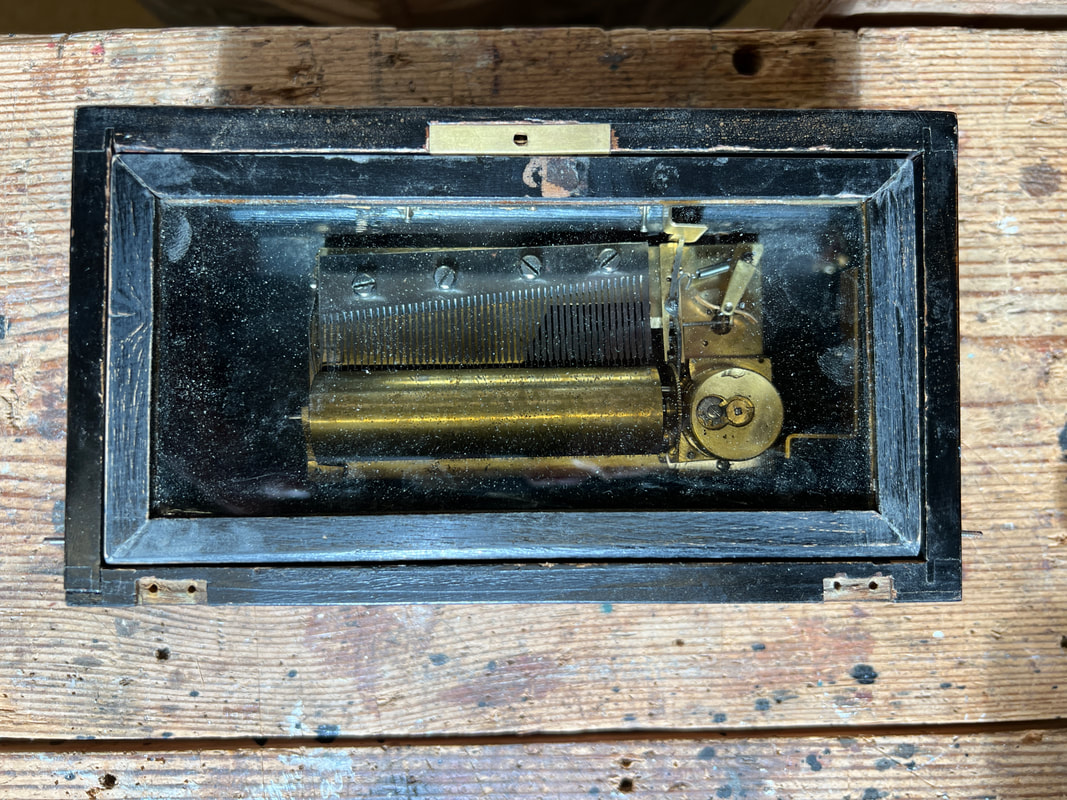
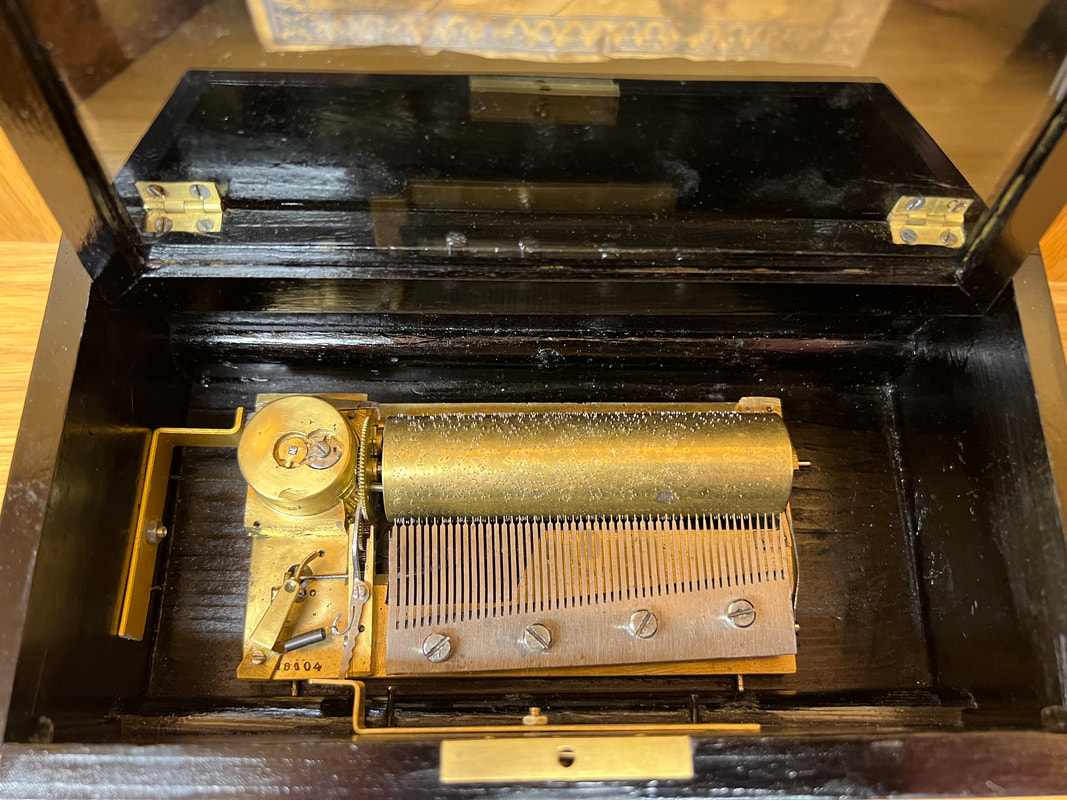
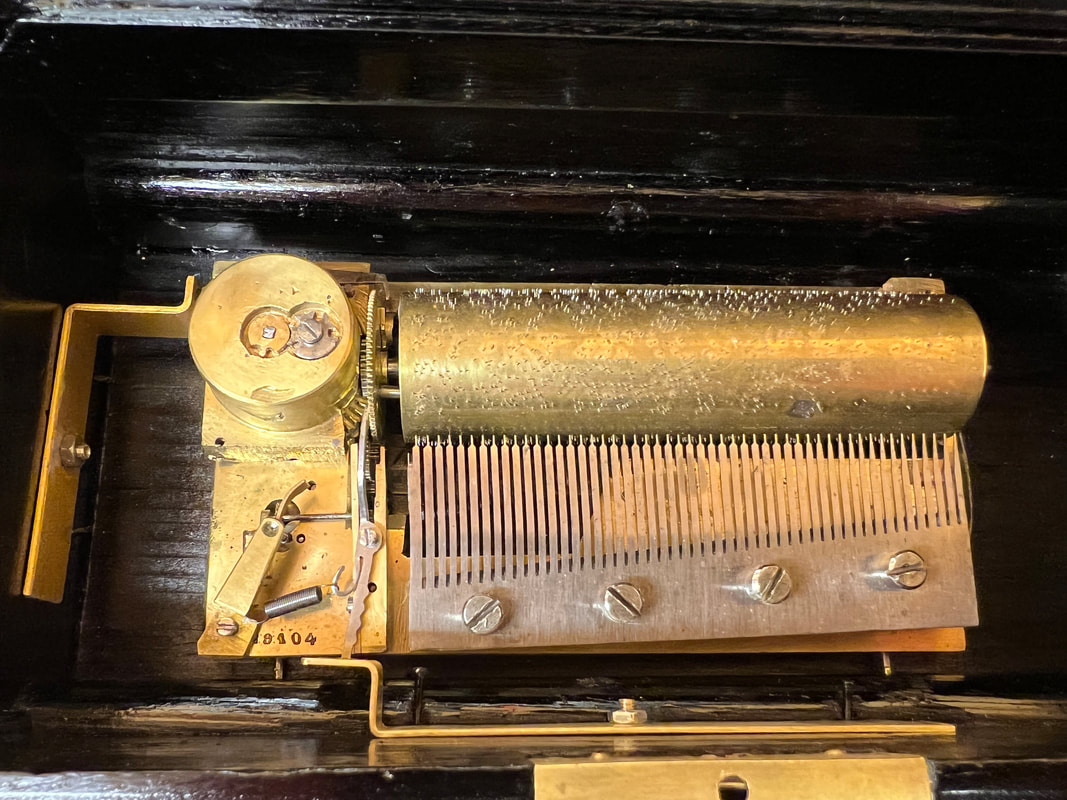
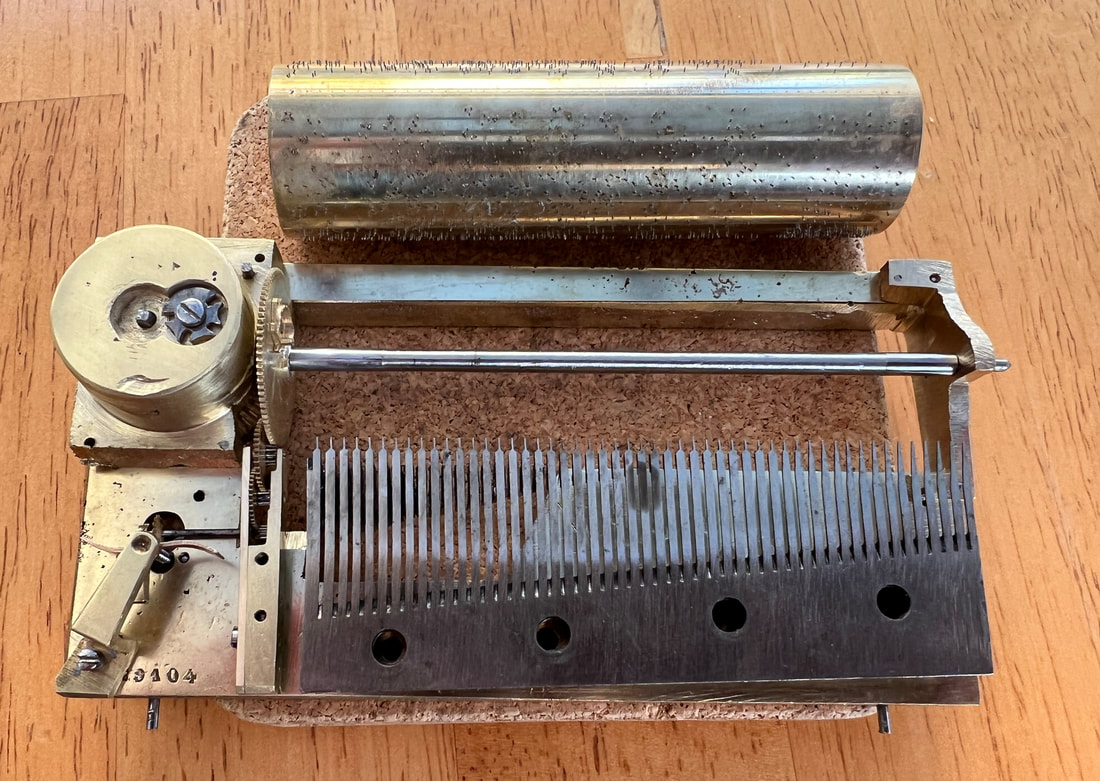
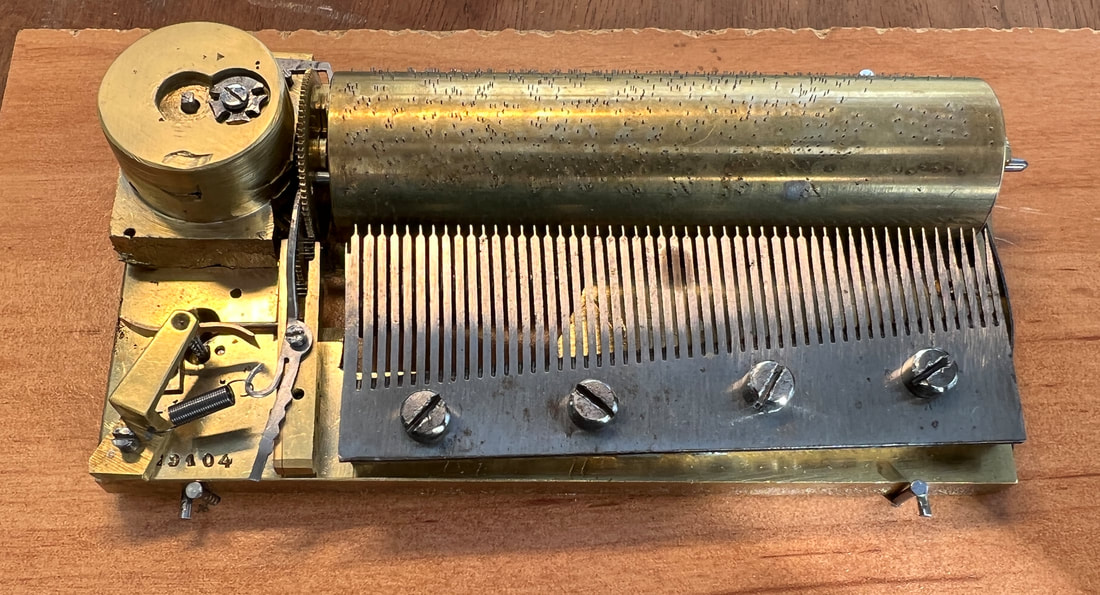
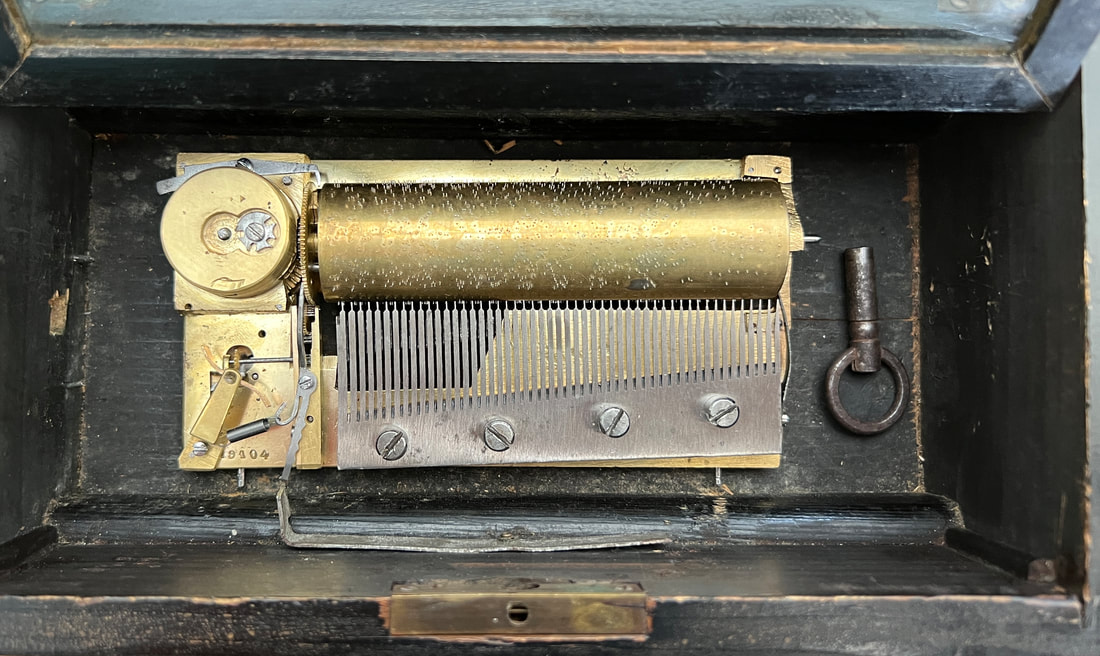
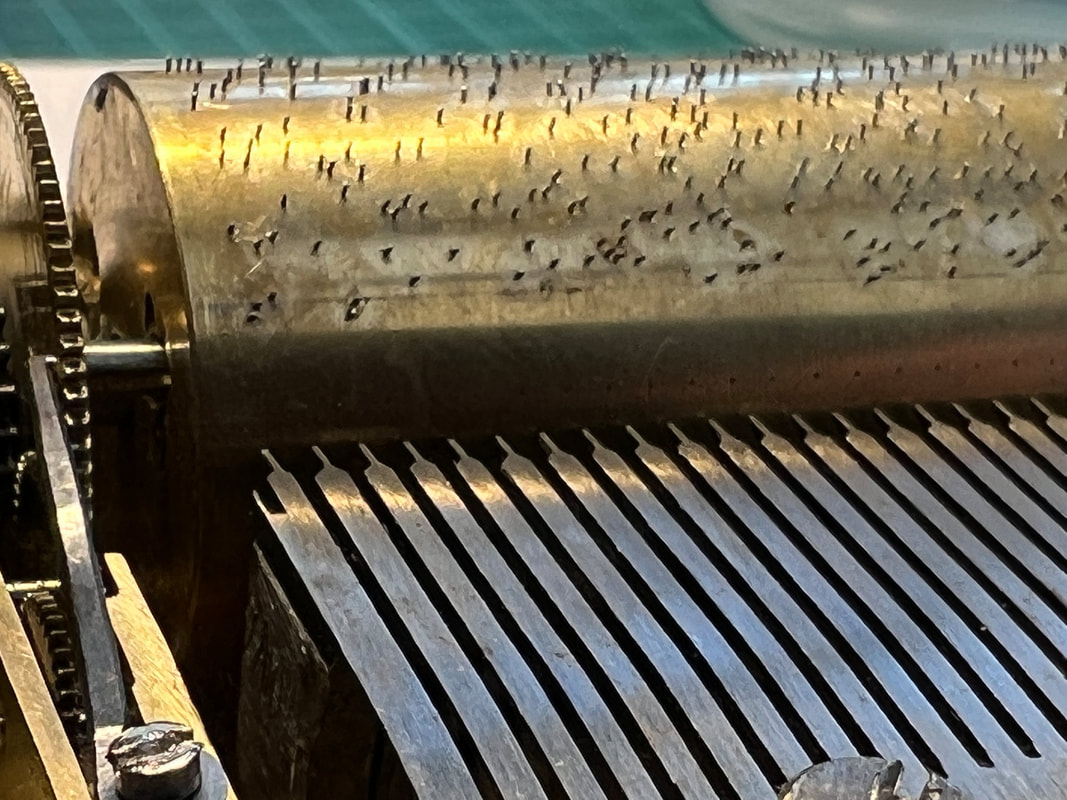
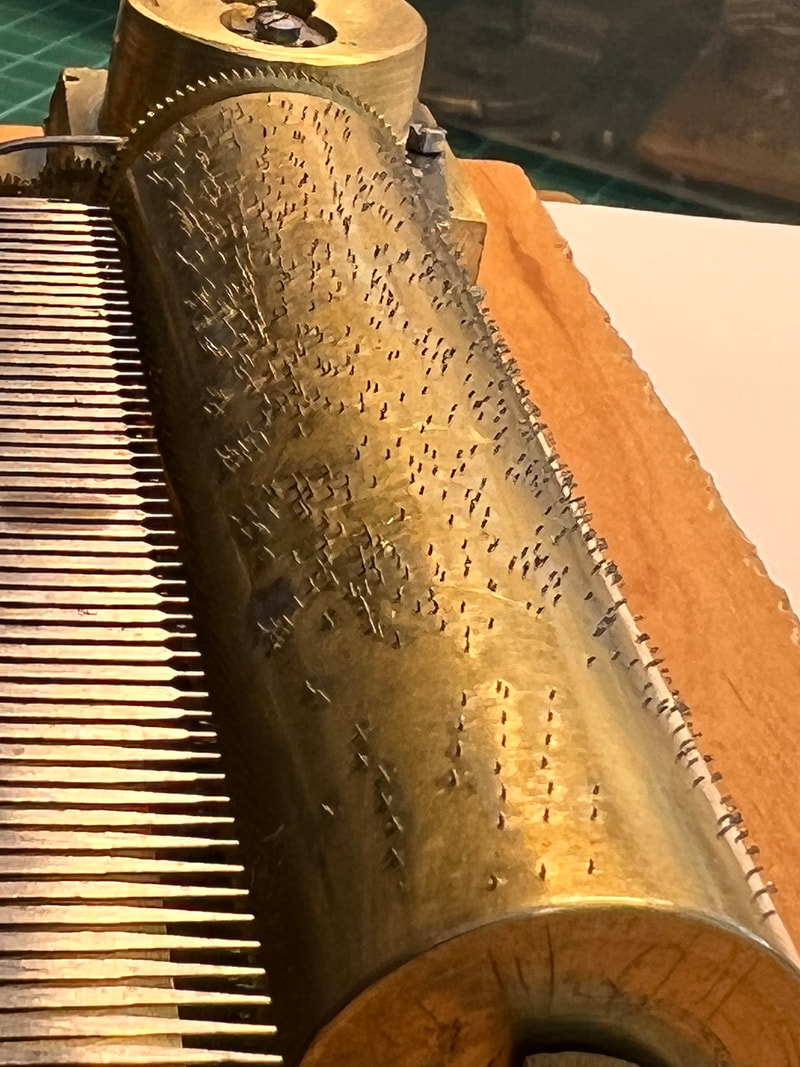
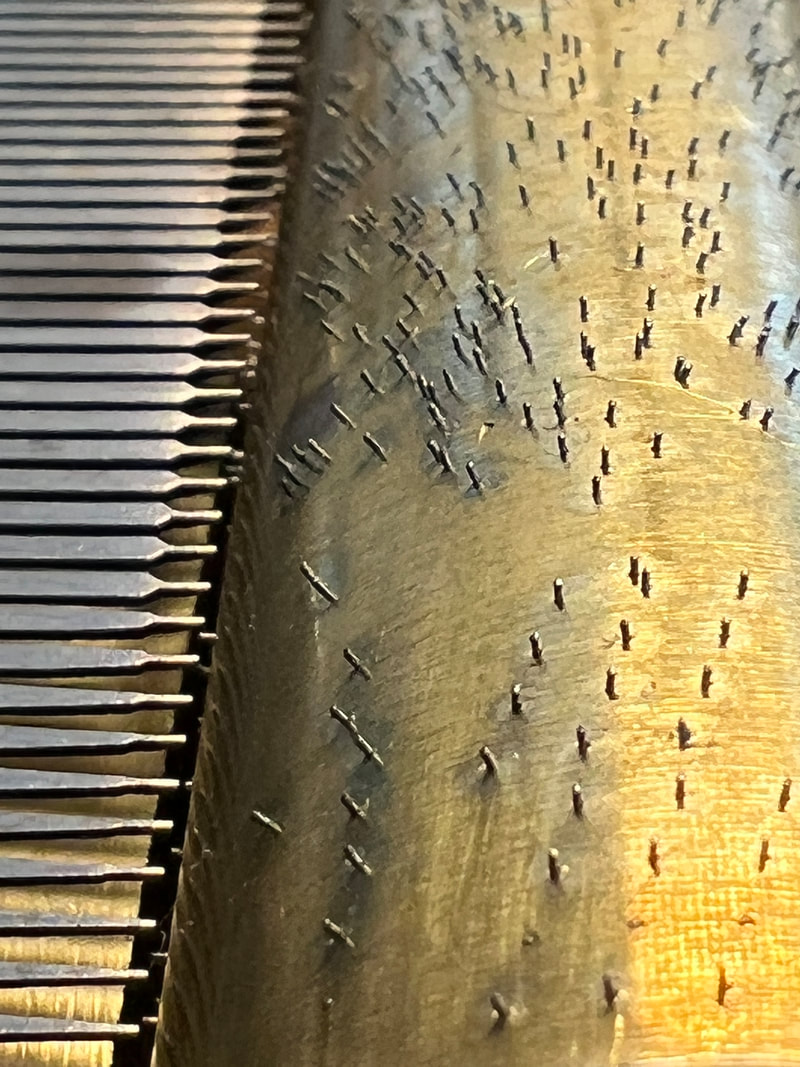
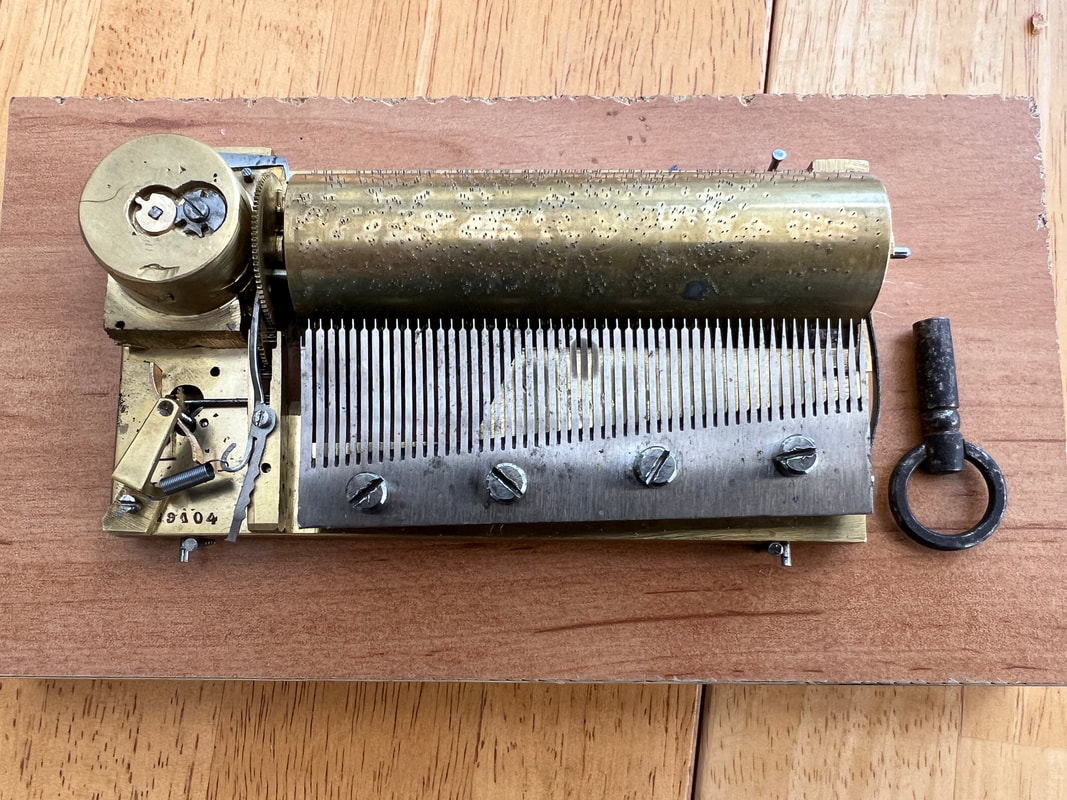
This box is known as a Petites Musique, being a larger movement, but of a similar mechanical design, to a Snuff Box or Tabatiére.
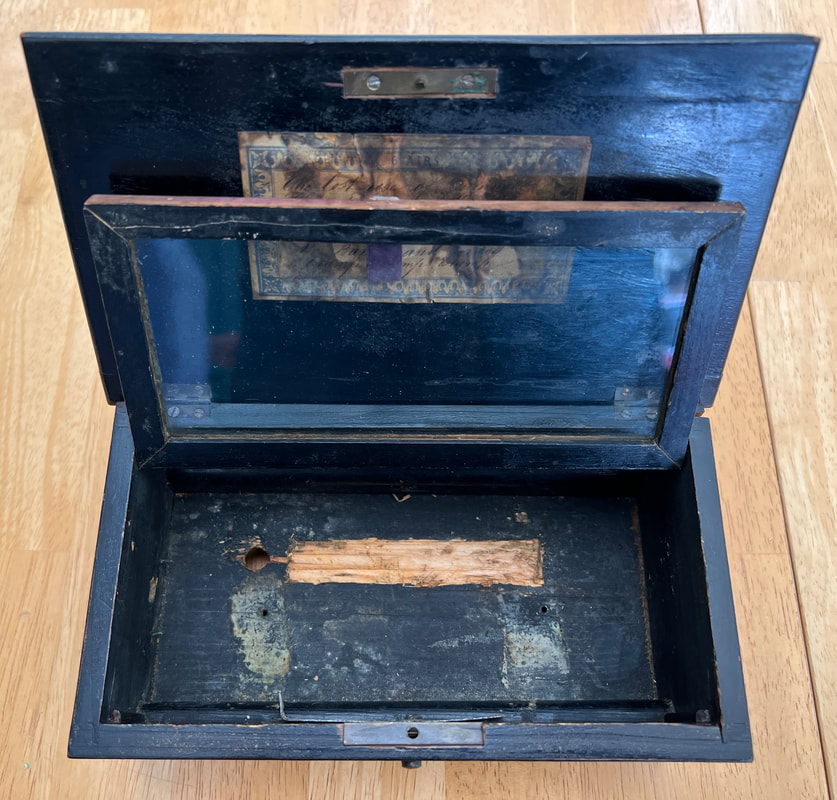
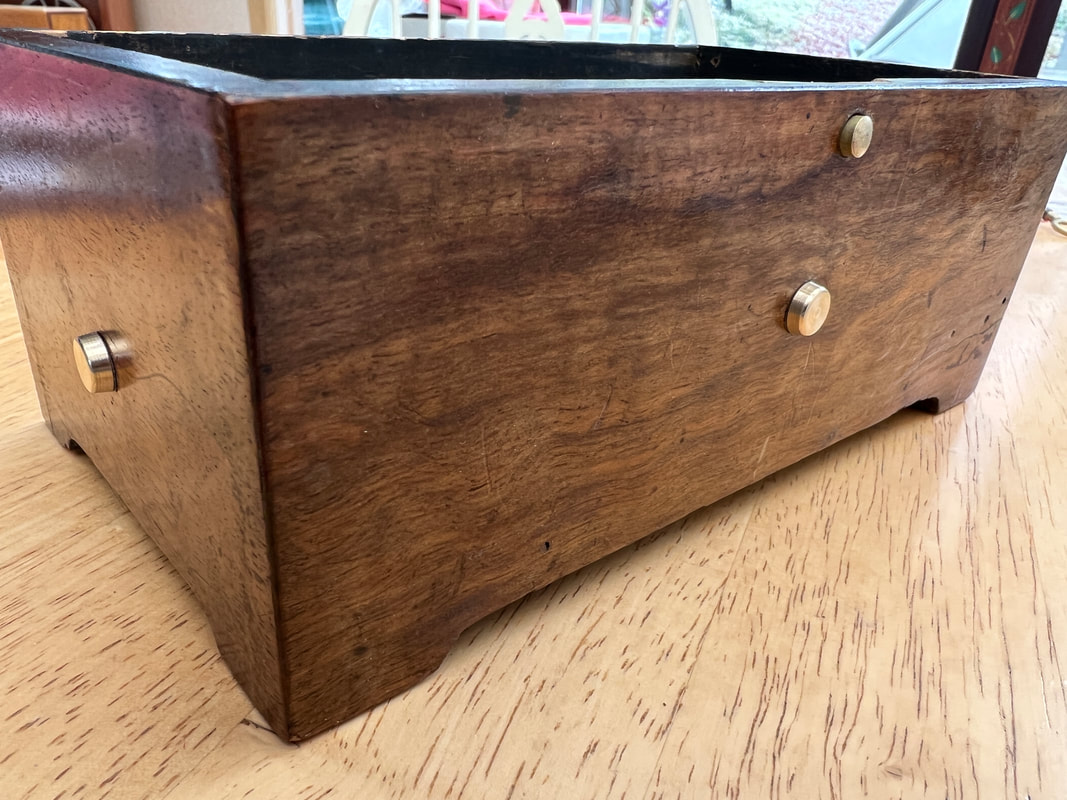
The box is a tiny version of a Cartel box.
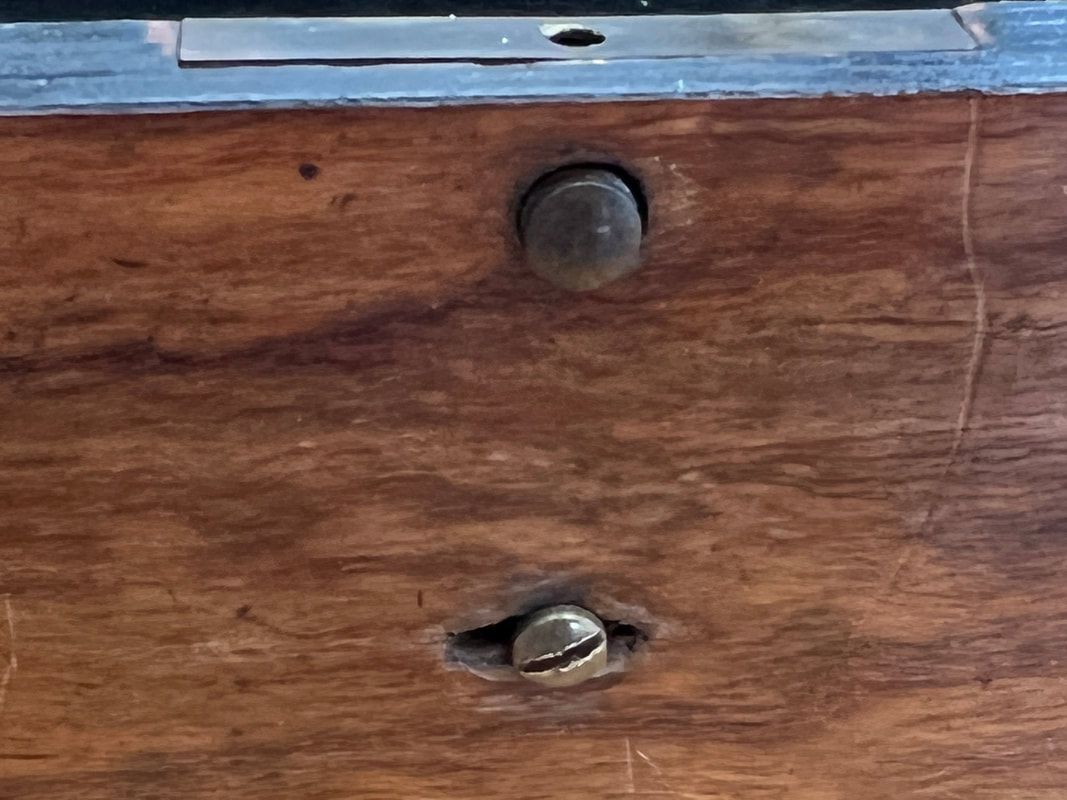
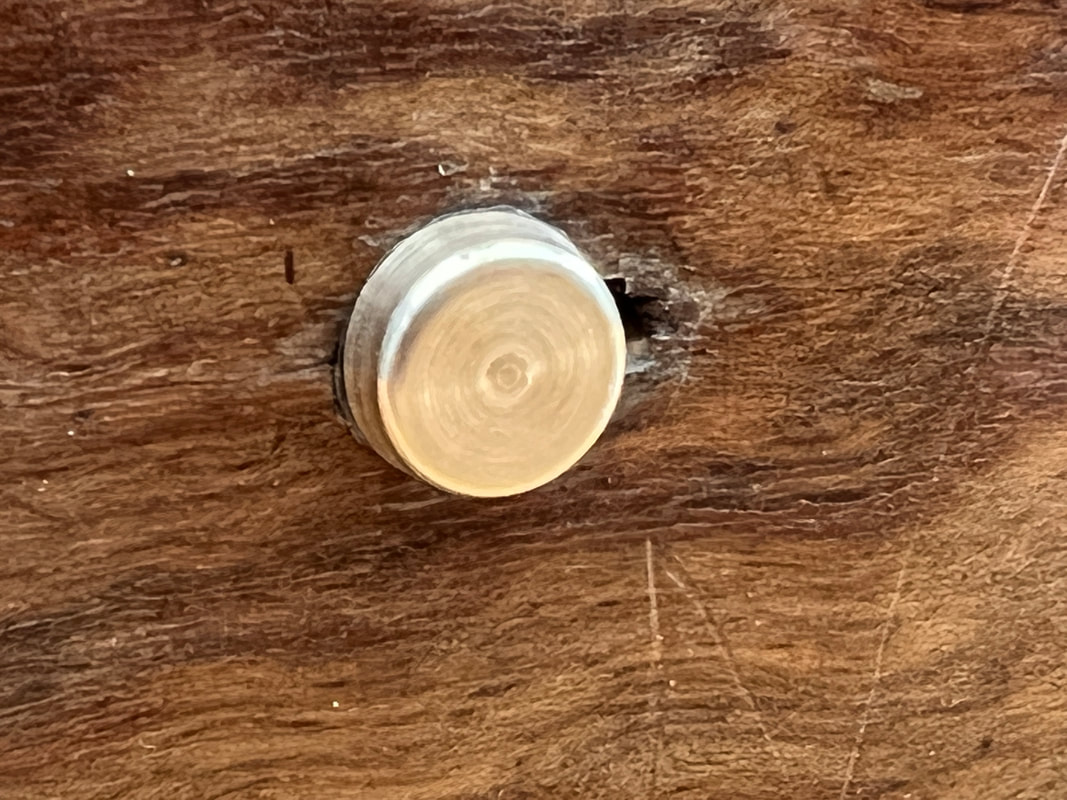
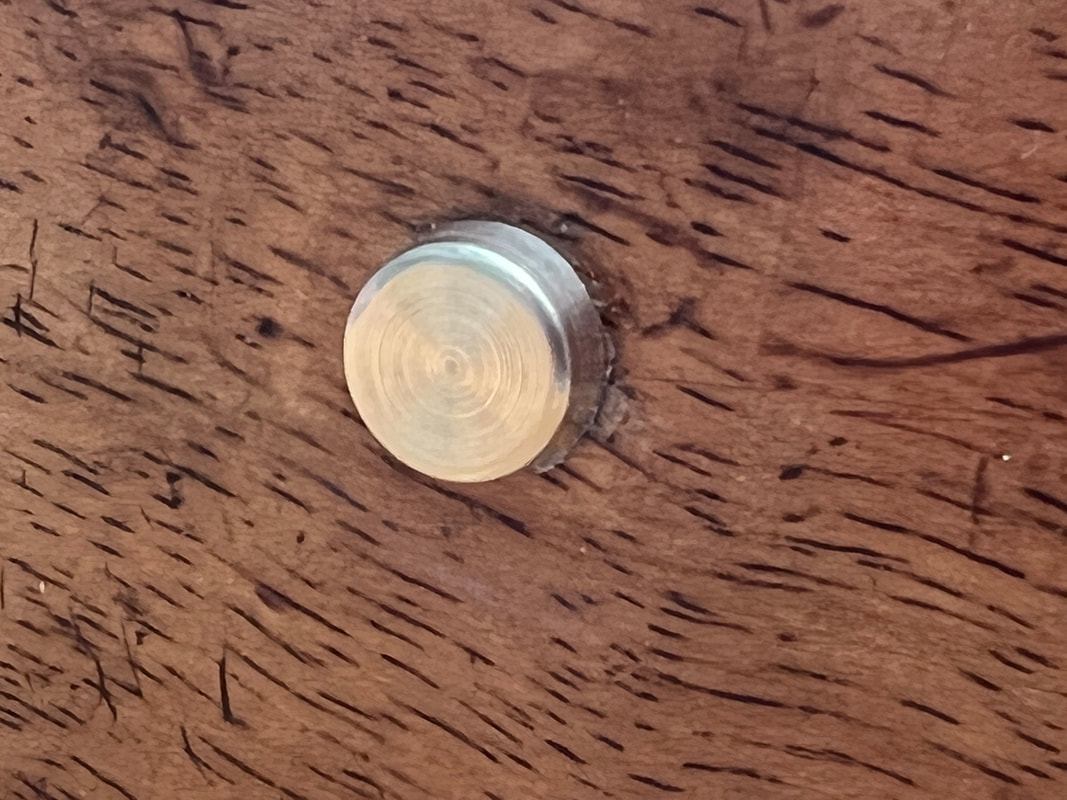
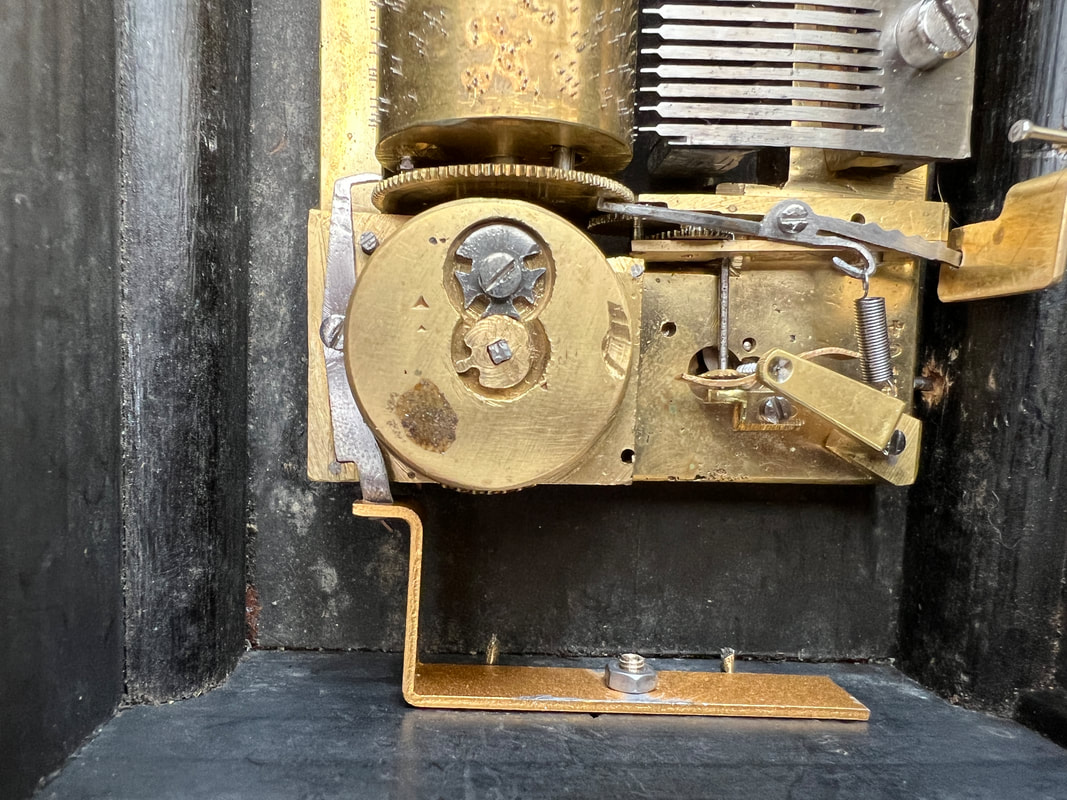
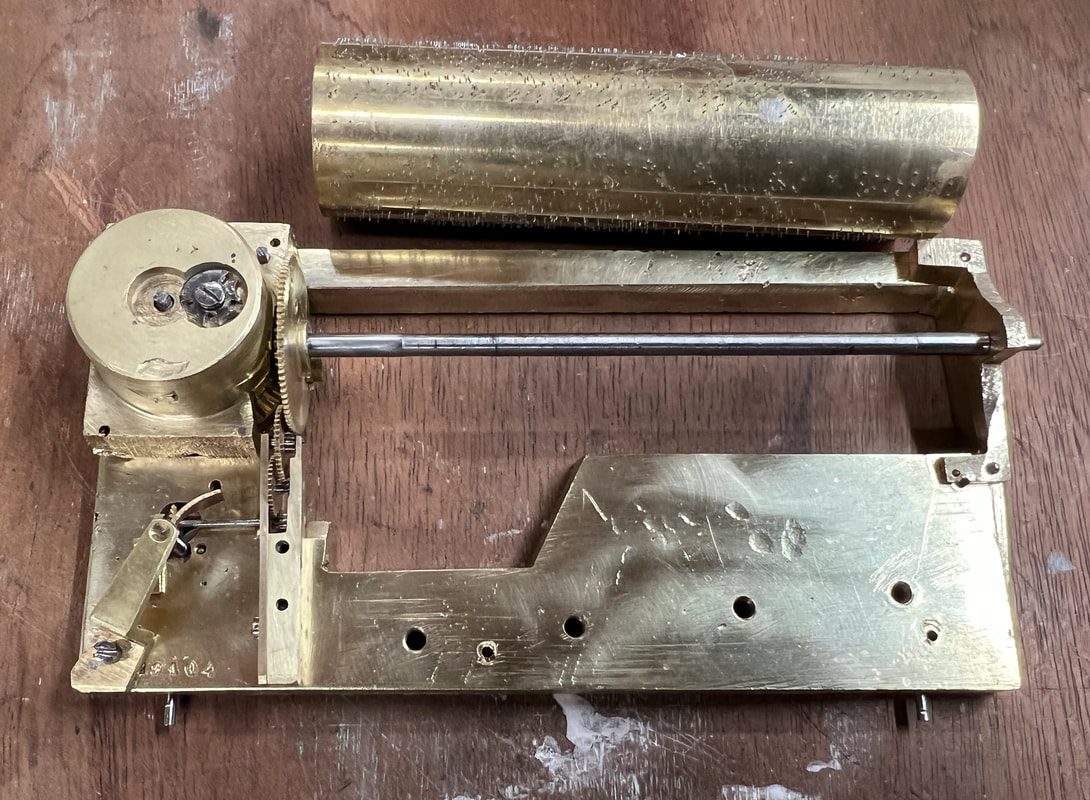
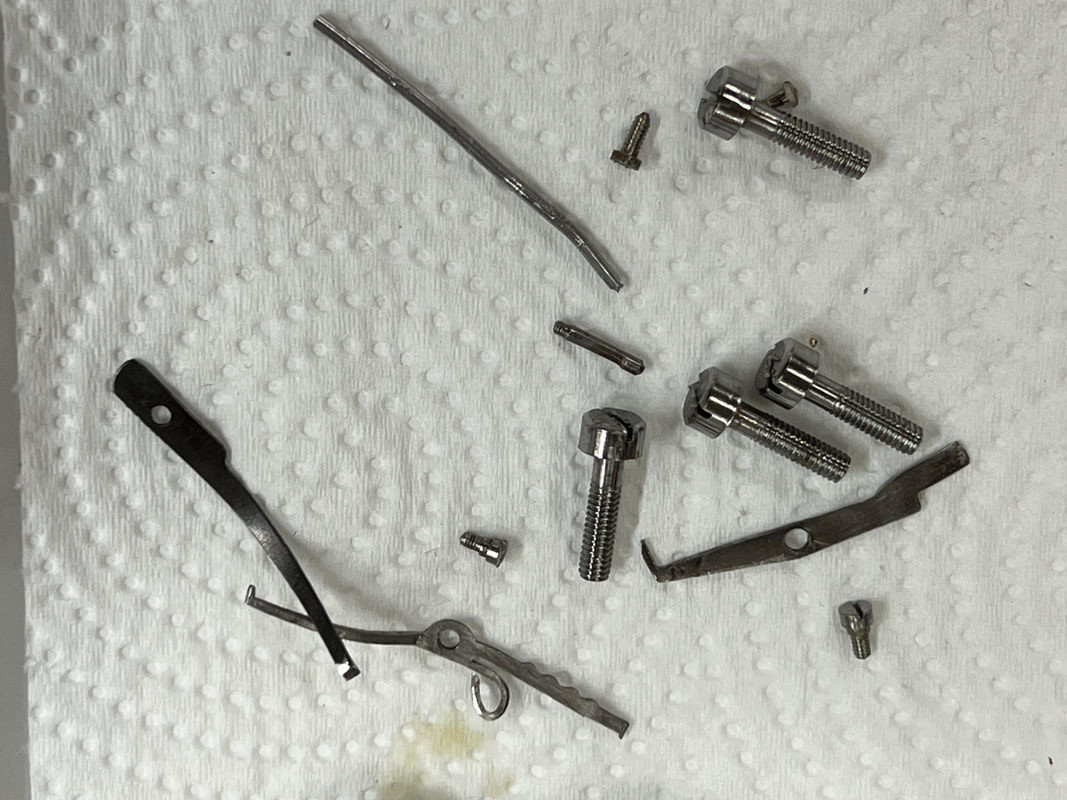
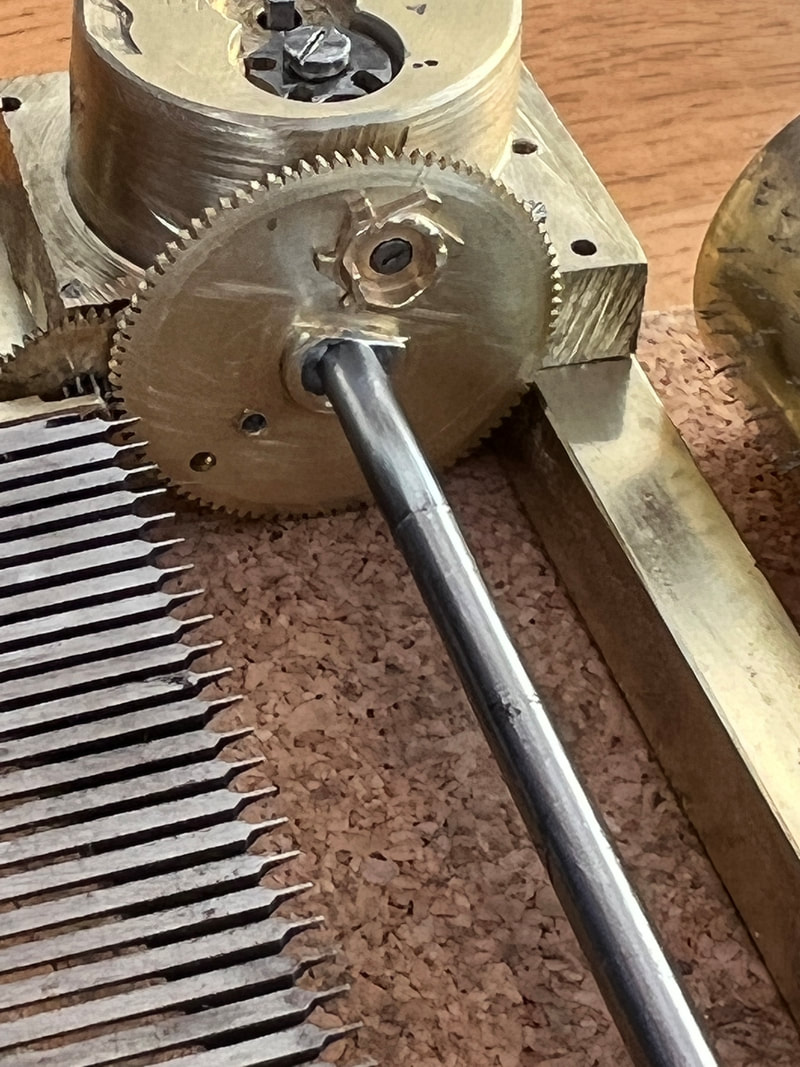
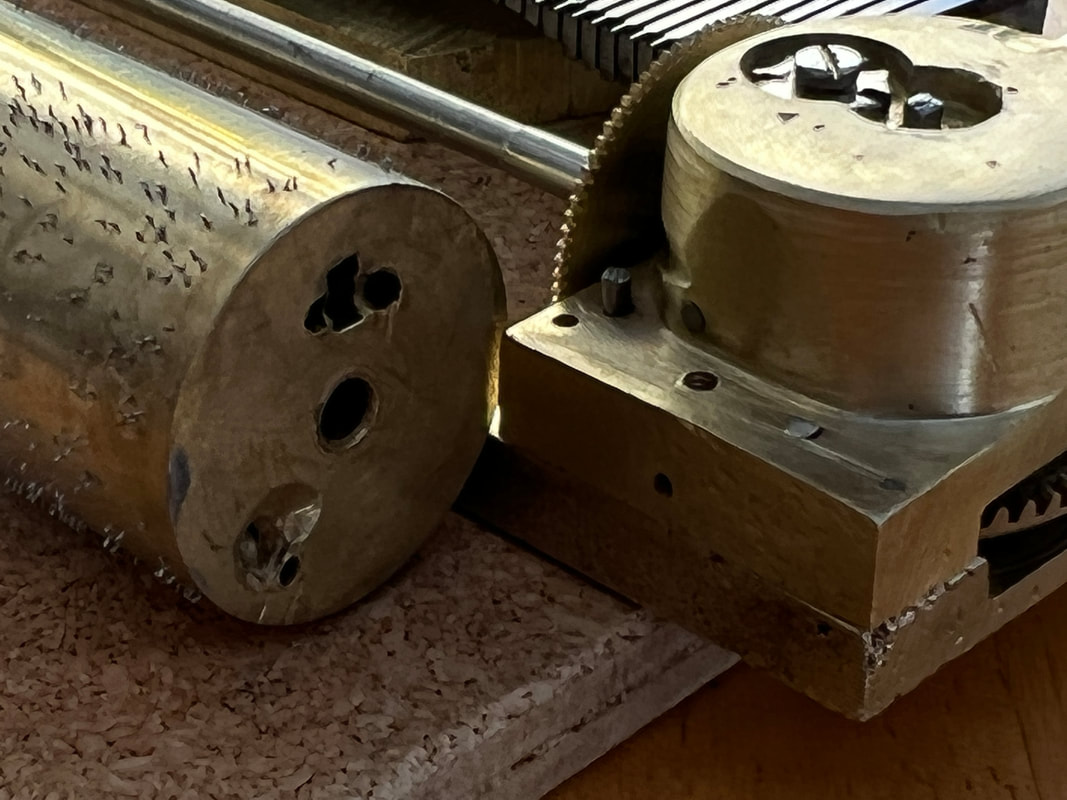
It arrived in a sorry state, with no cylinder drive peg and no snail cam register peg. My local friend made new ones for me plus a new male Geneva Stop works part.
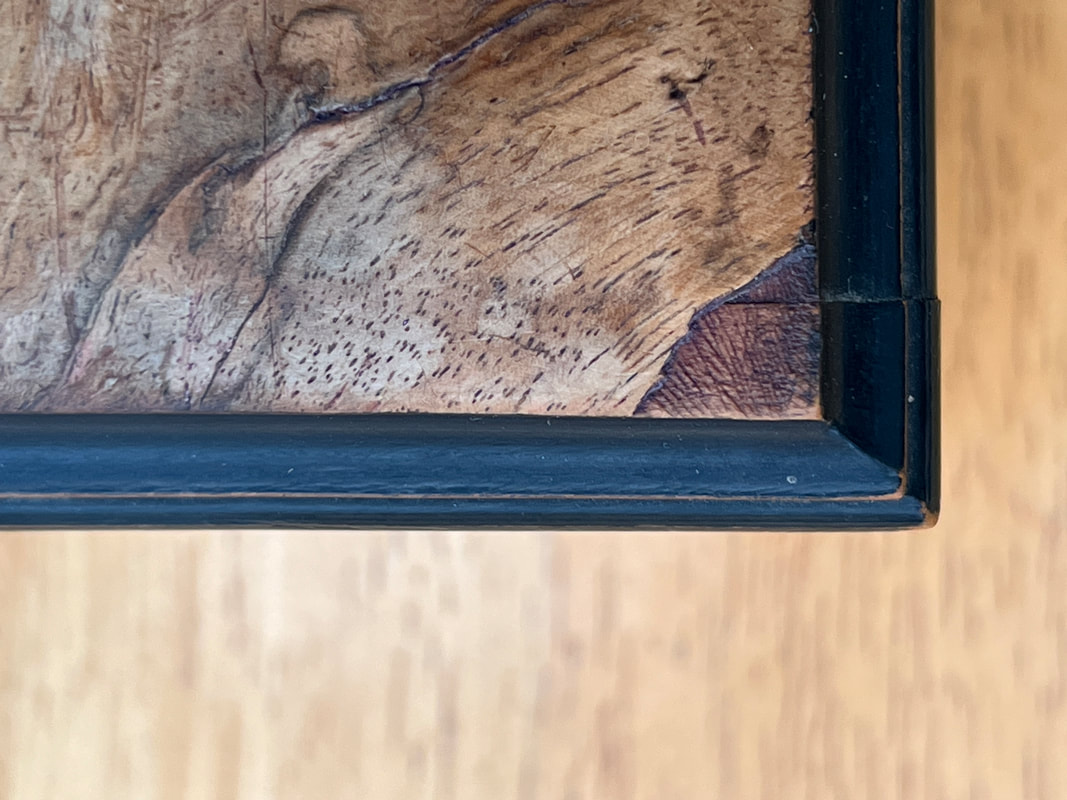
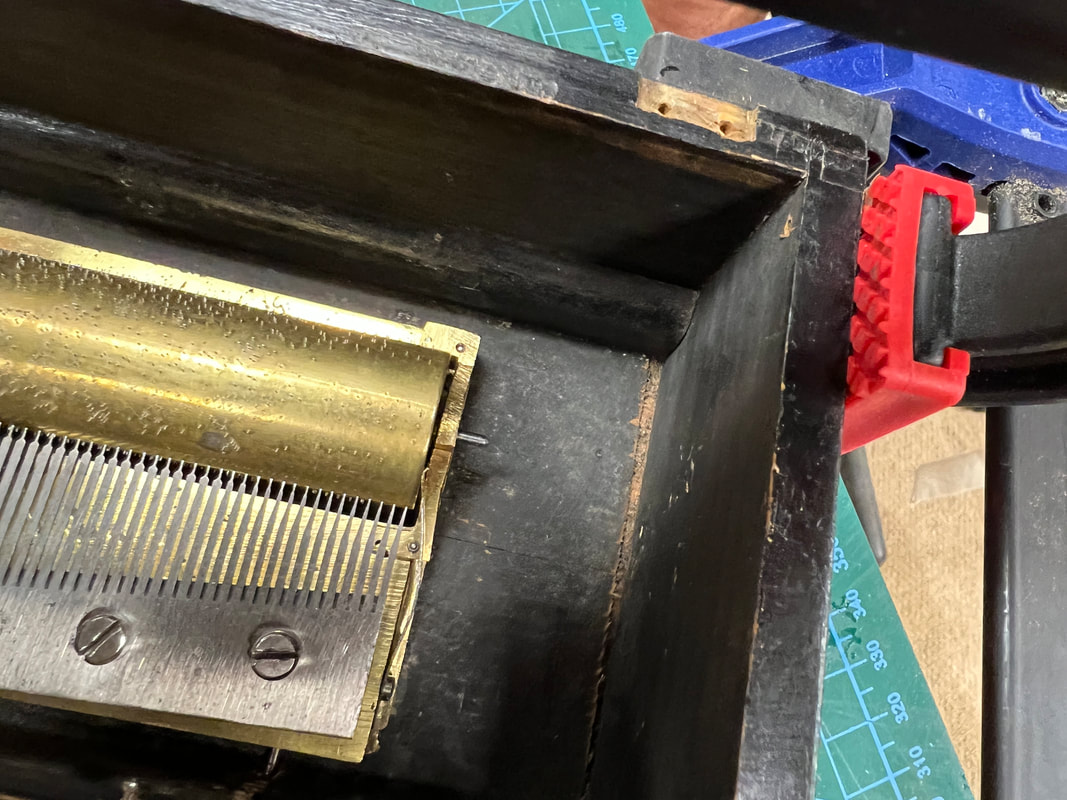
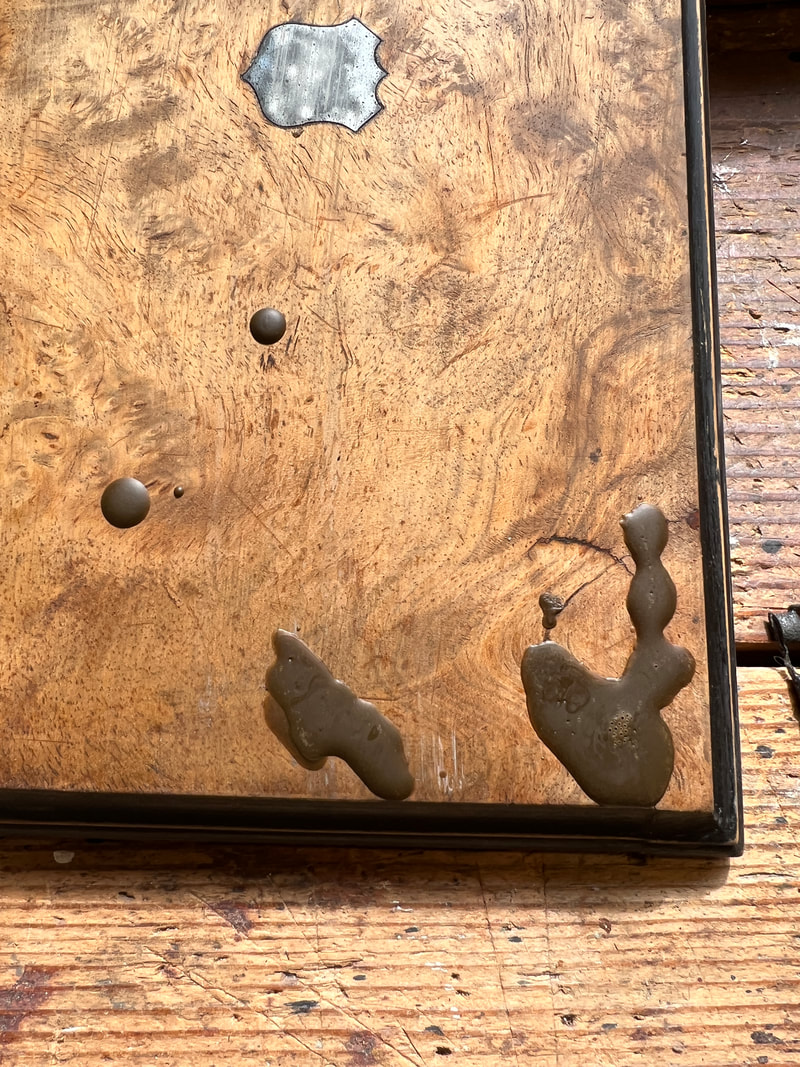
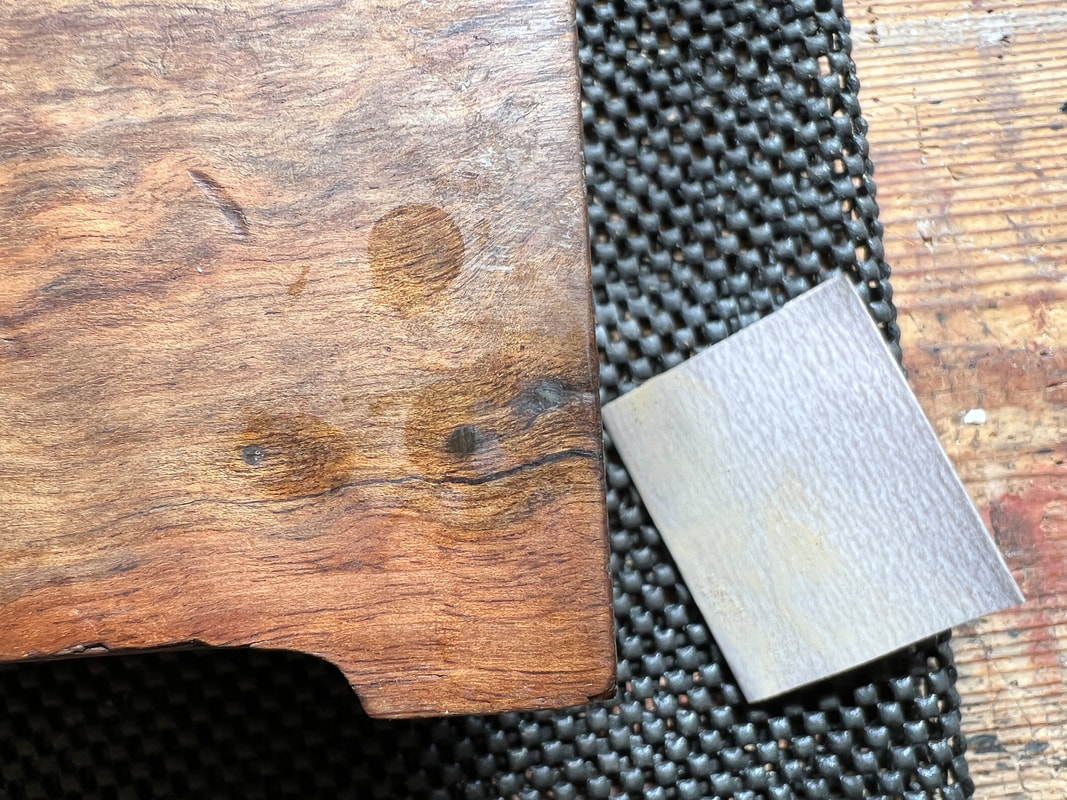
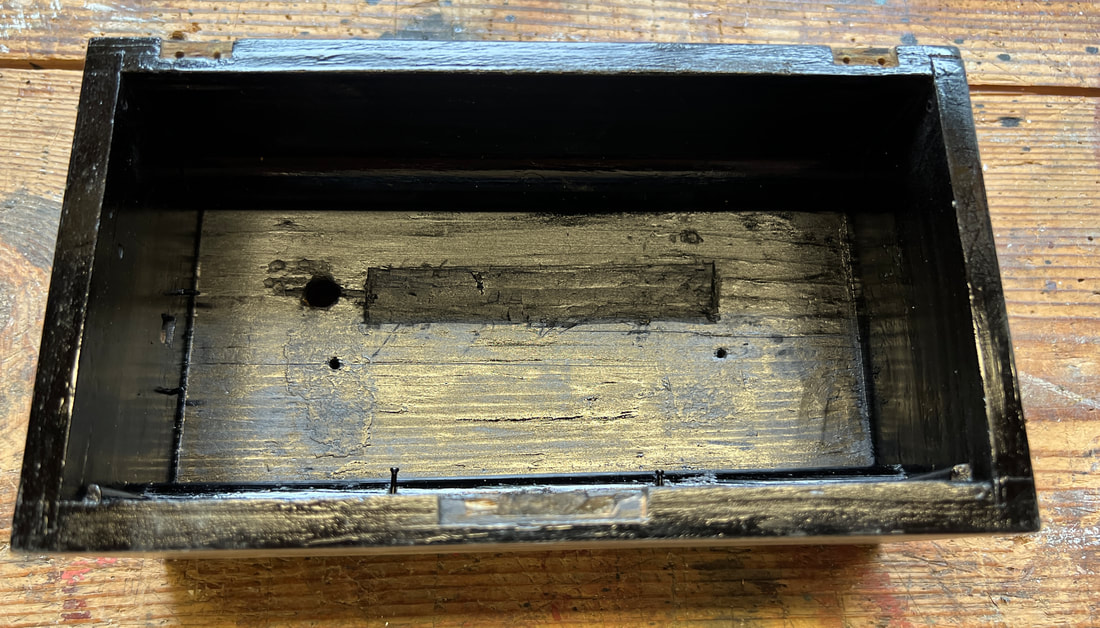
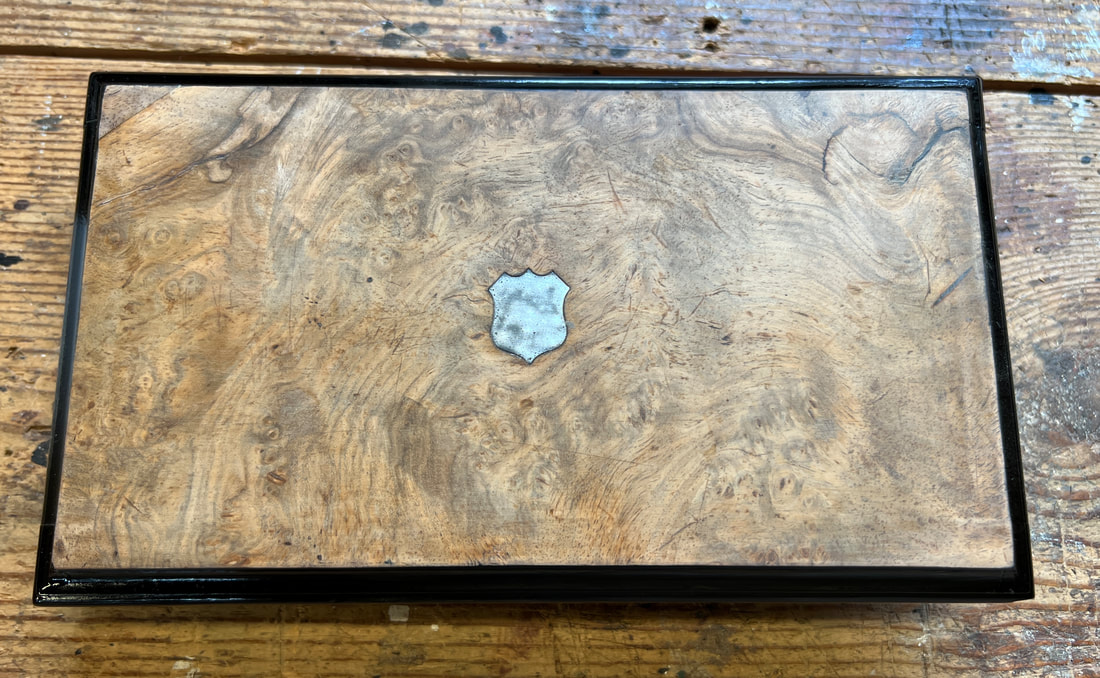
The box needs some attention too. There is a corner of veneer missing from the top, which should be easy to match and repair,
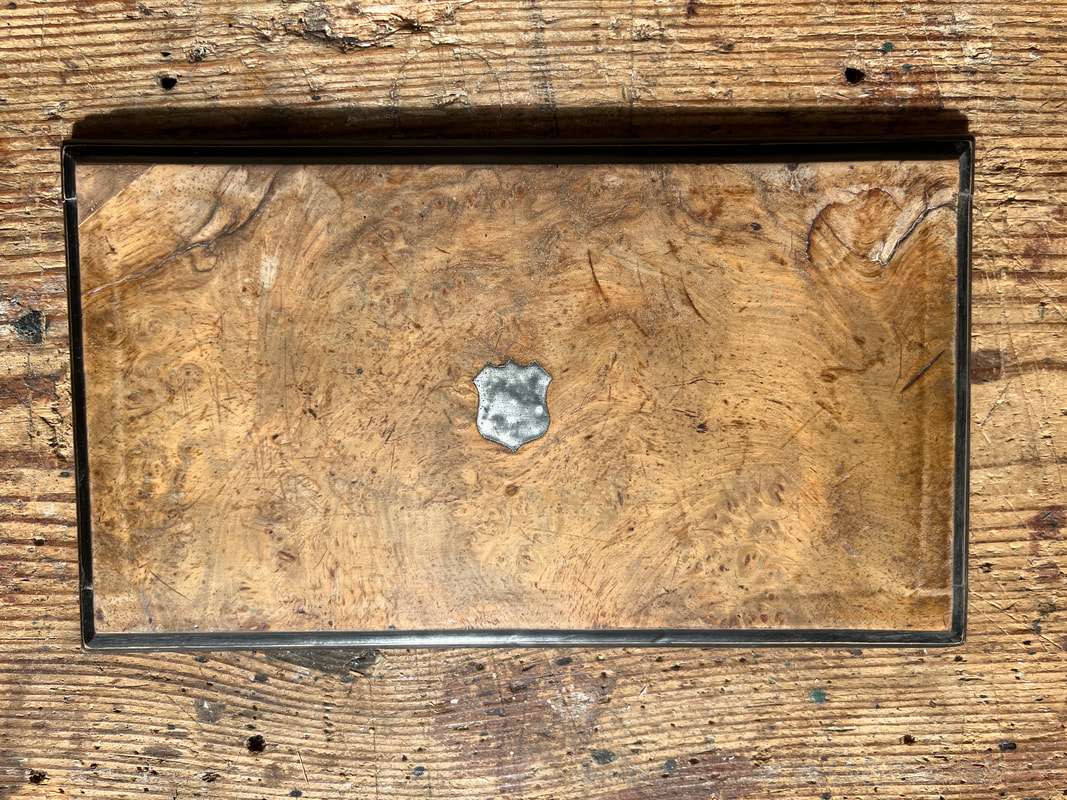
Then a repolish and some new change mechanism parts before its ready for display.
The box is a tiny version of a Cartel box.
It arrived in a sorry state, with no cylinder drive peg and no snail cam register peg. My local friend made new ones for me plus a new male Geneva Stop works part.
The box needs some attention too. There is a corner of veneer missing from the top, which should be easy to match and repair,
Then a repolish and some new change mechanism parts before its ready for display.
The Movement
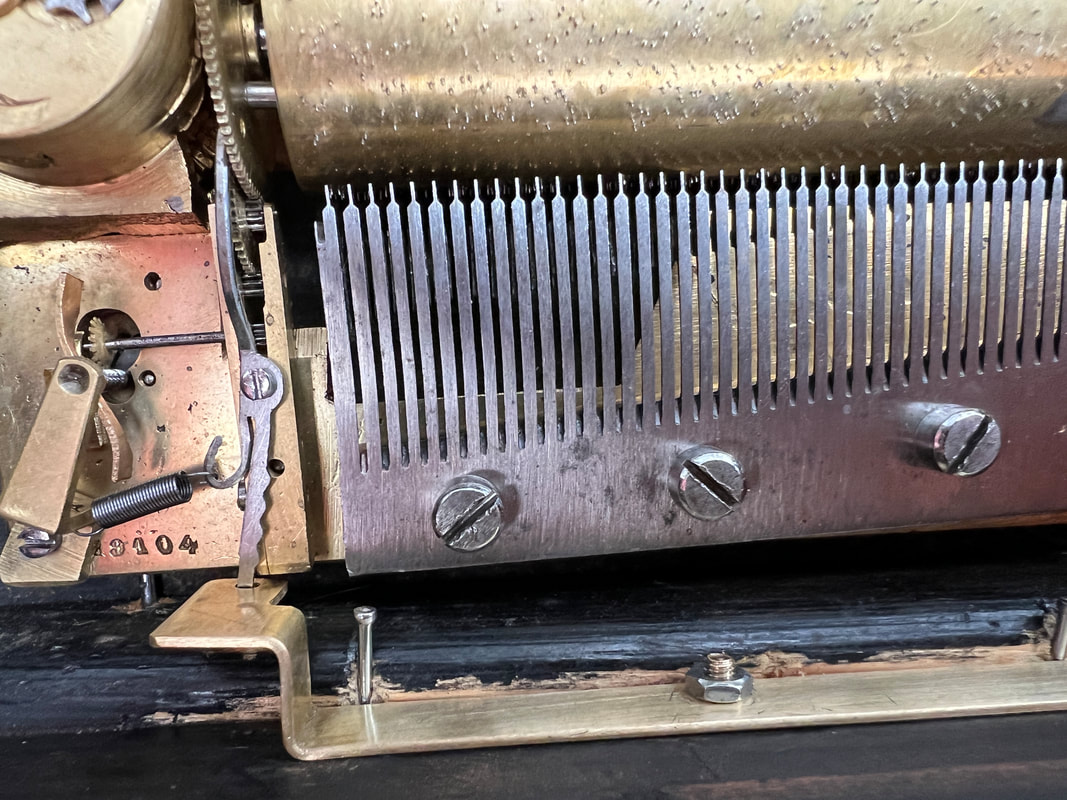
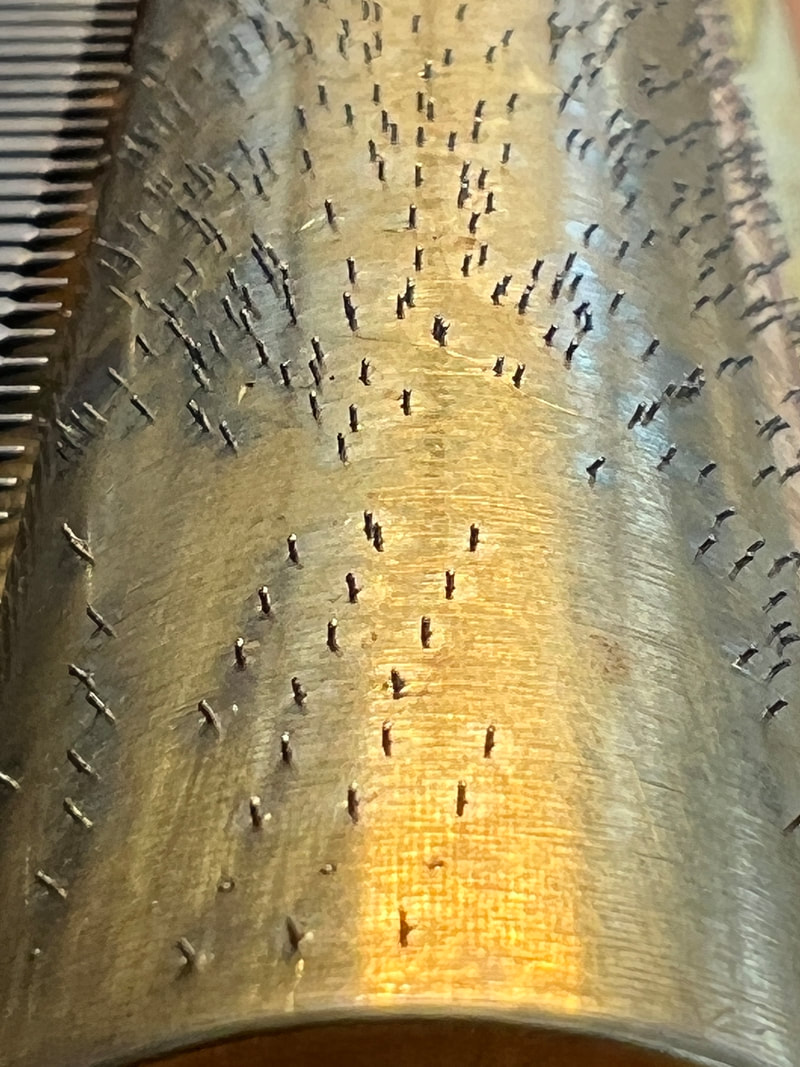
The usual dismantle, clean, polish, fix, reassemble, test.
Because it's been manhandled in order to sort the missing parts, it's going to have a second clean.
Because it's been manhandled in order to sort the missing parts, it's going to have a second clean.


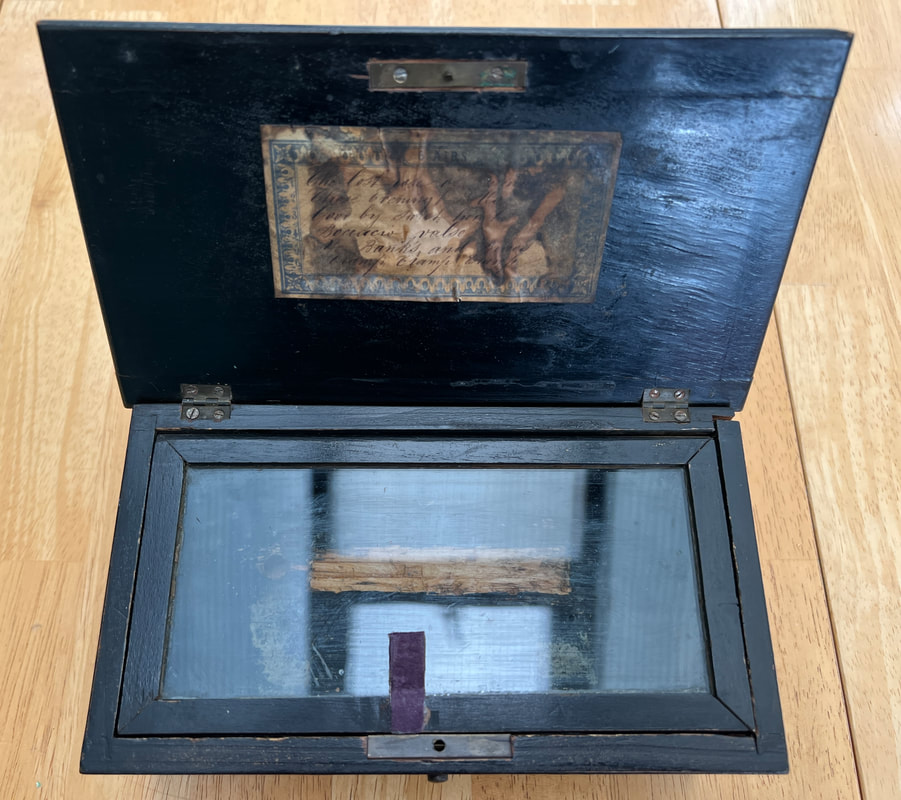
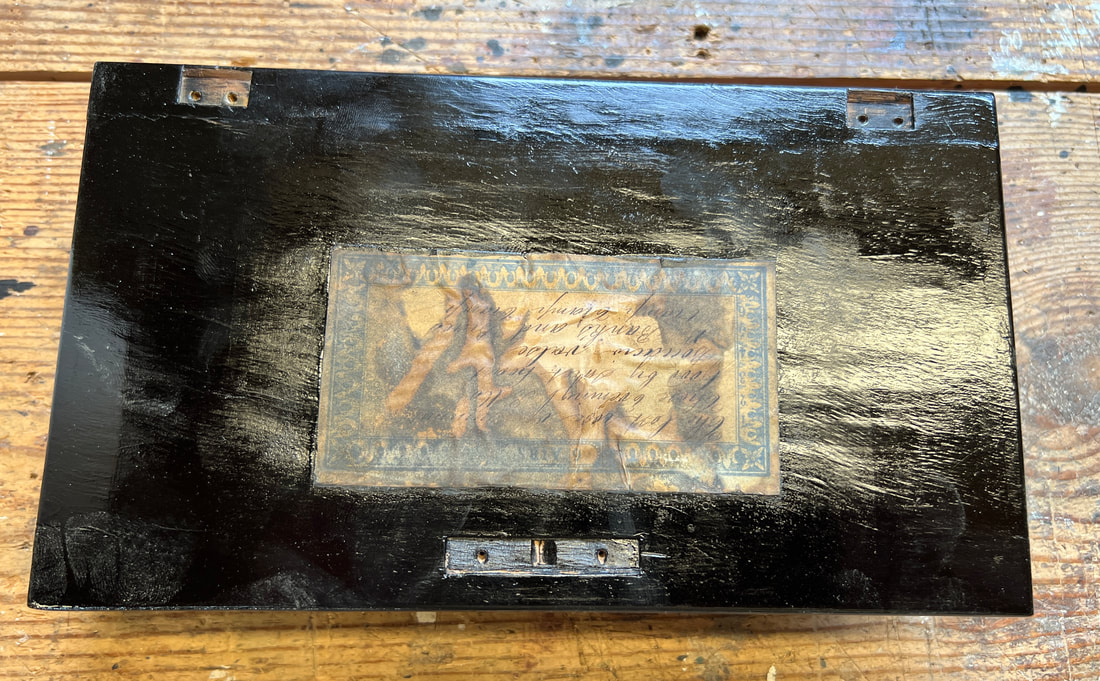
Tunesheet decyphered as:
The Last Rose of Summer by Thomas Moore (pre 1852)
Those Evening Bells by Thomas Moore (pre 1852)
Goodbye Sweetheart by John Liptrot Hatton (early 1860's)
Boccaccio Waltz (c 1879)
The Banks & Braes By Robbie Burns (1781)
Tramp, Tramp, Tramp (1864) A US Civil War favourite with words by George F Foot. It was known as The Prisoner's Hope. It's also the base tune for the famous "Do You Hear the People Sing" from Les Miserables
As the latest tune is 1879, this box is likely to have been made around 1880
Grateful thanks to Paul Bellamy for his help with the above.
The Last Rose of Summer by Thomas Moore (pre 1852)
Those Evening Bells by Thomas Moore (pre 1852)
Goodbye Sweetheart by John Liptrot Hatton (early 1860's)
Boccaccio Waltz (c 1879)
The Banks & Braes By Robbie Burns (1781)
Tramp, Tramp, Tramp (1864) A US Civil War favourite with words by George F Foot. It was known as The Prisoner's Hope. It's also the base tune for the famous "Do You Hear the People Sing" from Les Miserables
As the latest tune is 1879, this box is likely to have been made around 1880
Grateful thanks to Paul Bellamy for his help with the above.
The Box
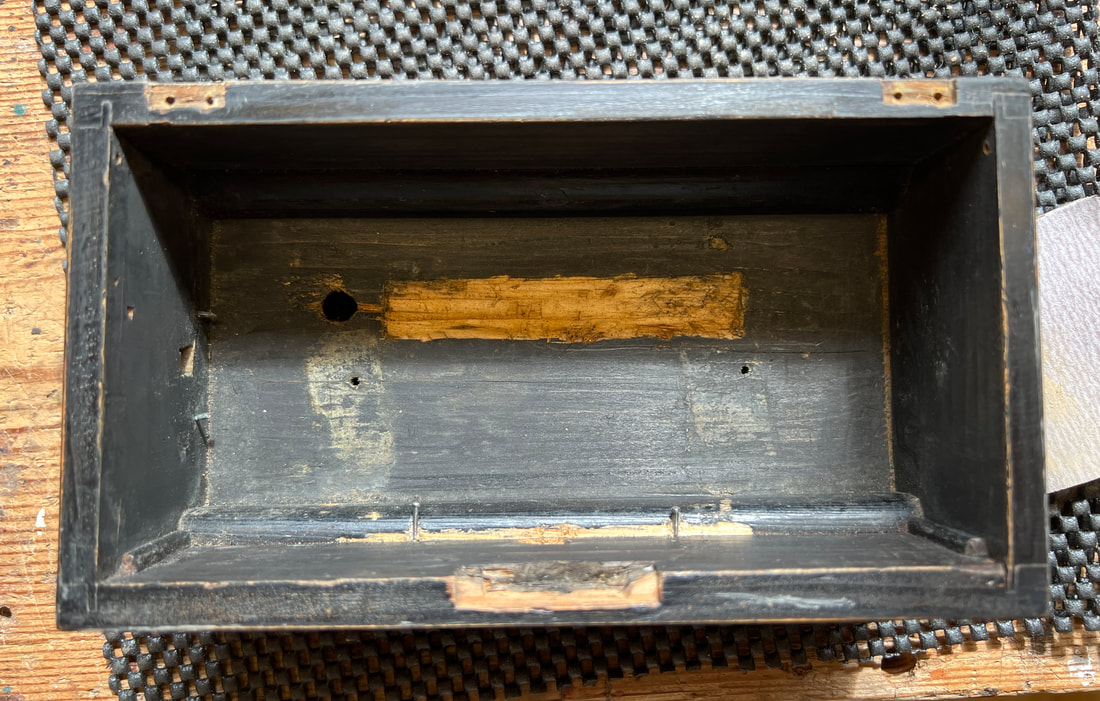
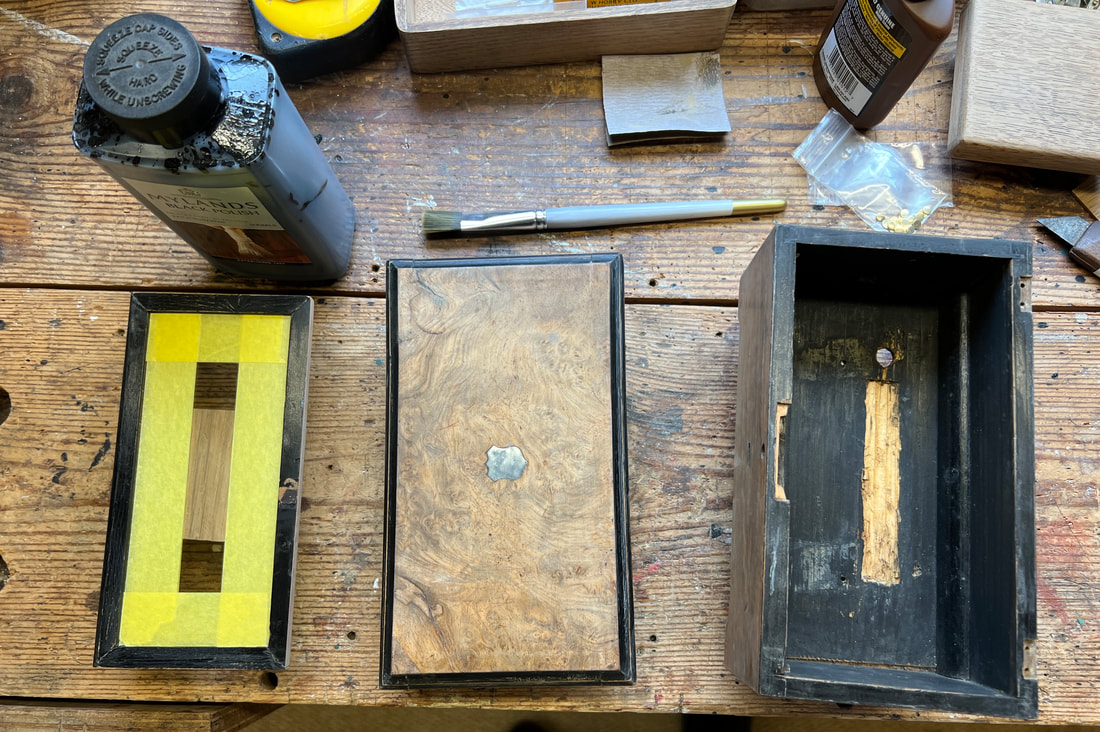
Some joints to re-glue and the top corner needs a new piece of walnut veneer.
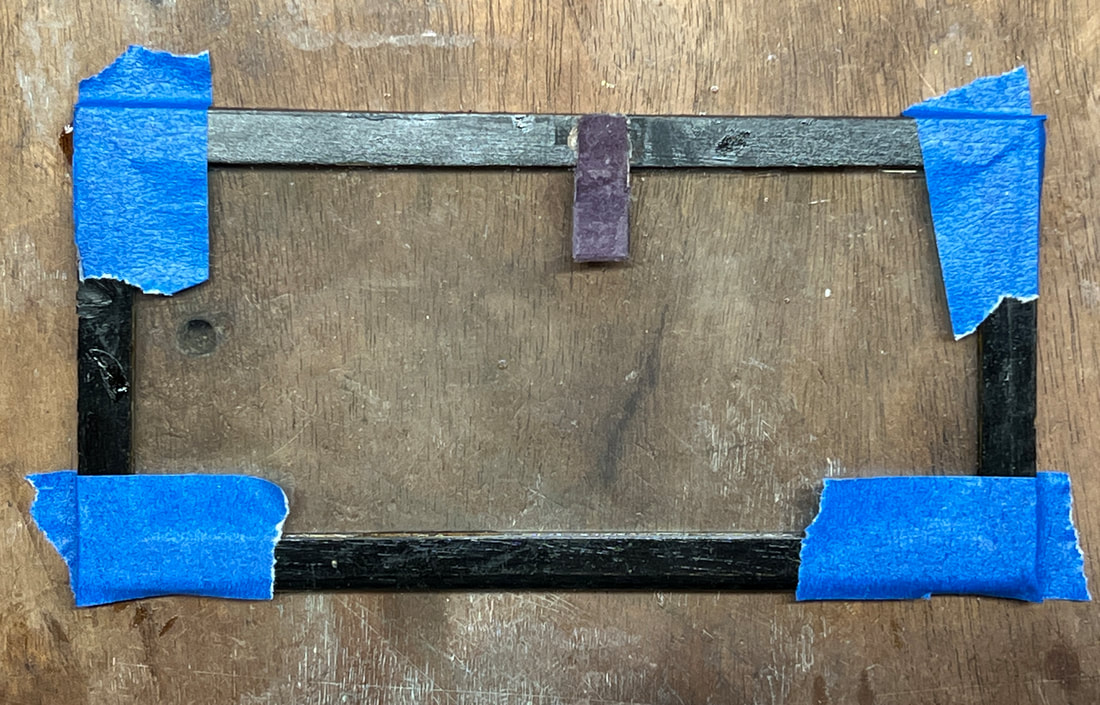
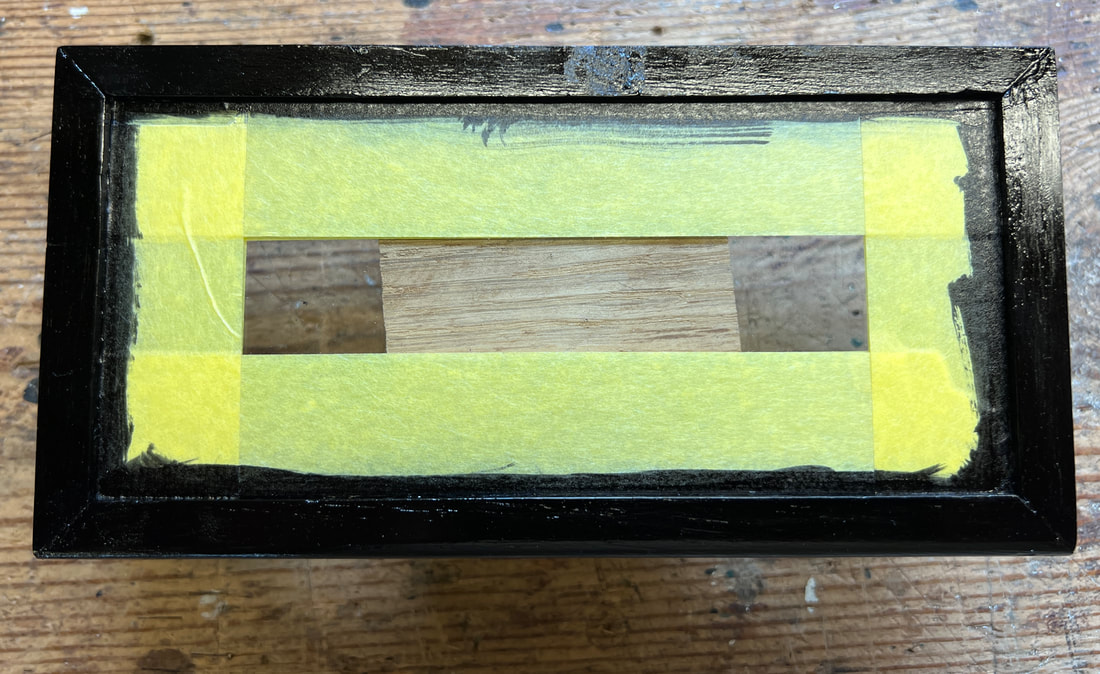
The glass lid frame has come apart and the control sliders need to be remade.
The glass lid frame has come apart and the control sliders need to be remade.